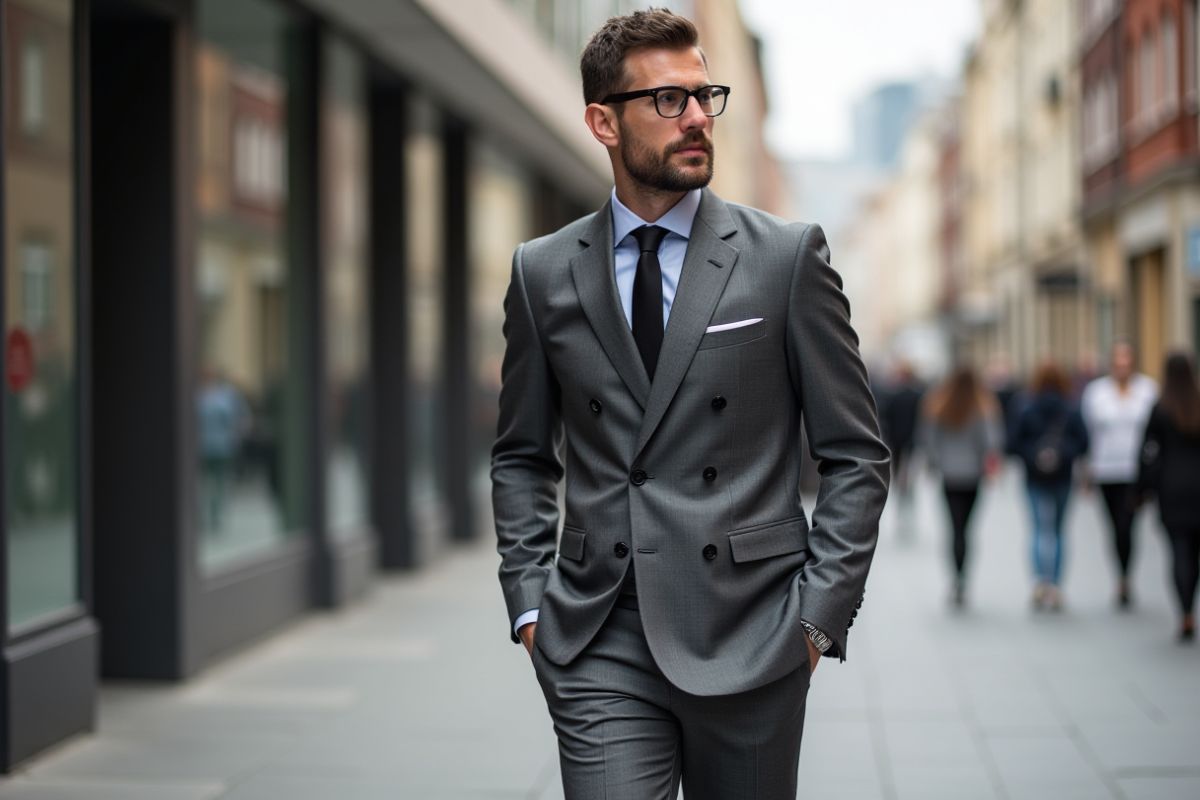
The suit is undergoing its biggest transformation in years. In 2026, sharp structure is giving way to comfort, movement and effortless sophistication. Enter soft tailoring: a refined approach to dressing that blends the polish of traditional suiting with the ease modern wardrobes demand.
From the runways of Milan Men’s Fashion Week to the latest collections from Prada and Brunello Cucinelli, softer tailoring is redefining what professional attire looks and feels like. Today's suit is less restrictive, more versatile, and designed to move with the wearer. Whether you're heading into the boardroom, attending an event, or dressing for weekend plans, the relaxed power suit has become one of the most important suit trends of 2026.
Why Everyone Is Talking About Soft Tailoring in 2026
Modern life demands clothing that works harder. As dress codes continue to evolve across business environments, many men are looking for garments that balance formality with comfort and movement.
That's exactly where soft tailoring excels.
Unlike traditional precision tailoring, which often relies on rigid internal structure to shape the body, soft tailoring embraces softer construction, minimal internal canvassing and natural shoulders. The result is a silhouette that feels modern while still looking polished.
The shift also aligns perfectly with the ongoing rise of quiet luxury. Rather than making a statement through logos or bold patterns, today's most stylish dressers are investing in craftsmanship, premium fabrics and subtle design details that offer confidence and depth.
What Is Soft Tailoring?
Soft tailoring is a sartorial approach that reduces the rigid structure traditionally found in suits while maintaining elegance and refinement.
Rather than heavily padded shoulders, stiff chest construction and restrictive cuts, soft tailoring prioritises fluid drape, breathable fabrics and relaxed silhouettes.
Key characteristics include:
- Natural shoulders
- Softer construction
- Minimal internal structure
- Looser silhouettes
- Wider trousers
- Open-weave fabrics
- Breathable materials
- Relaxed tailoring that allows the jacket to move naturally
The focus is no longer on forcing the garment to shape the body. Instead, tailoring in 2026 is about creating harmony between the wearer and the suit.
Italian tailoring houses have championed this philosophy for years. Brands such as Brunello Cucinelli have refined the art of sophisticated ease, while Prada's recent runway presentations have introduced younger audiences to a more relaxed approach to modern suits.
Data Signal: Why the Trend Matters
Industry analysts continue to report growing demand for versatile clothing that accommodates hybrid work, travel and social occasions. Luxury menswear brands have responded by increasing their focus on breathable fabrics, softer construction and made-to-measure options that prioritise comfort without sacrificing style.
The result is a category that appeals to professionals, creatives and style-conscious consumers alike.
Key Pieces Dominating 2026
Not every suit looks the same in 2026. Certain pieces are emerging as clear favourites among designers and menswear enthusiasts.
1. The Relaxed Blazer
The blazer remains the foundation of soft tailoring.
Look for:
- Natural shoulders
- Wider lapels
- Soft chest construction
- Double-breasted jackets with relaxed proportions
- Unstructured finishes
Unlike traditional British tailoring, which often emphasises a sharper silhouette, contemporary soft tailoring allows the jacket to move naturally with the wearer.
Colours trending in 2026 include:
- Camel
- Forest green
- Earthy neutrals
- Tonal greys
- Rich jewel tones
2. Wider Trousers
Skinny tailoring continues to fade.
The modern trouser offers:
- More room through the leg
- Better drape
- Enhanced comfort
- Improved versatility
Wider trousers create balance when paired with relaxed jackets and contribute to the effortless refinement defining today's suit trends.
3. Tactile Fabrics
Fabric selection is becoming increasingly important.
Designers are focusing on tactile materials that provide texture and visual depth, including:
- Cashmere blends
- Herringbone wool
- Birdseye weaves
- Open-weave wool
- Lightweight breathable fabrics
These fabrics elevate even simple outfits through subtle sophistication.
4. Double-Breasted Suits Reimagined
The double-breasted suit isn't disappearing. It's evolving.
In 2026 collections, designers are introducing:
- Softer shoulders
- Lower button stance
- More relaxed cuts
- Lighter construction
The result feels less formal wear and more daily wear.
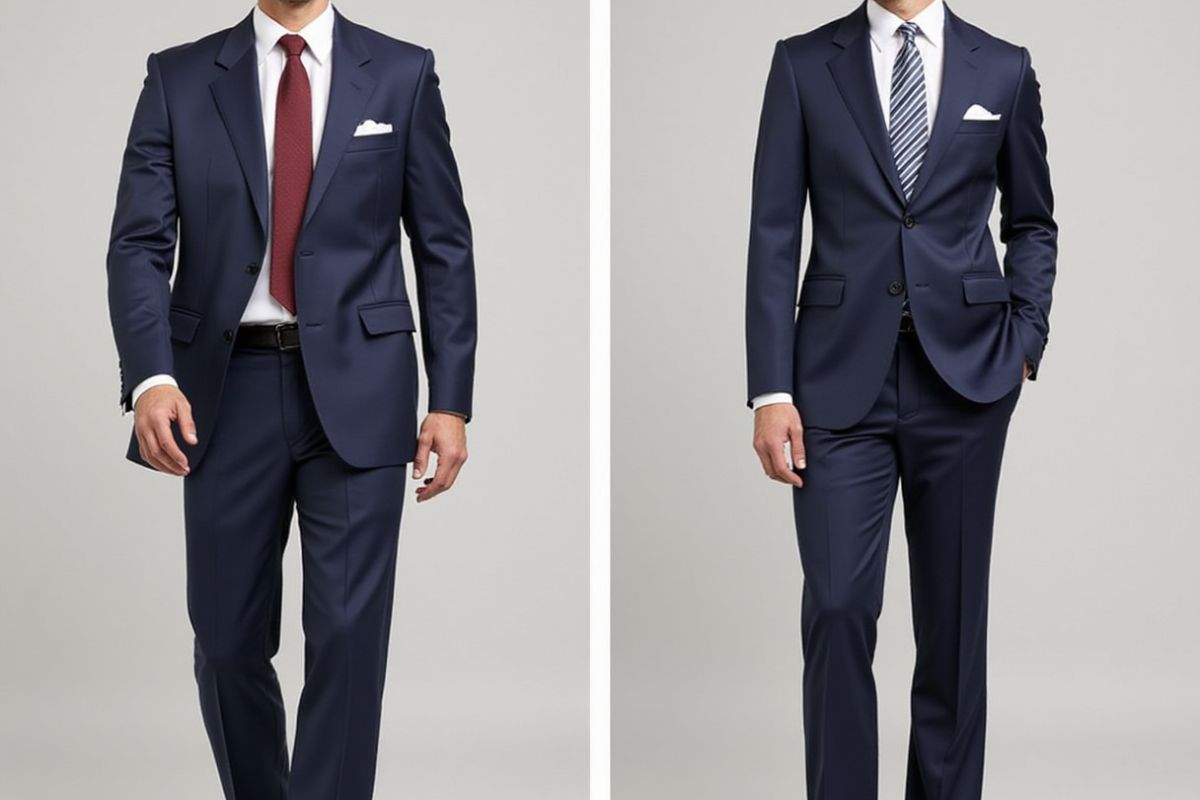
Real Outfit Transformations: Structured vs Relaxed
One of the easiest ways to understand soft tailoring is through styling contrast.
Traditional Structured Suit
- Sharp shoulder padding
- Slim trousers
- Crisp shirts
- High formality
- Restrictive movement
Best for:
- Formal corporate settings
- Traditional business environments
Soft Tailored Suit
- Natural shoulders
- Relaxed blazer
- Wider trousers
- Breathable fabrics
- Fluid drape
- Greater comfort and movement
Best for:
- Modern offices
- Creative industries
- Travel
- Weekend events
- Smart-casual occasions
Transformation Example
Before: A navy structured suit, stiff dress shirt and formal lace-up shoes.
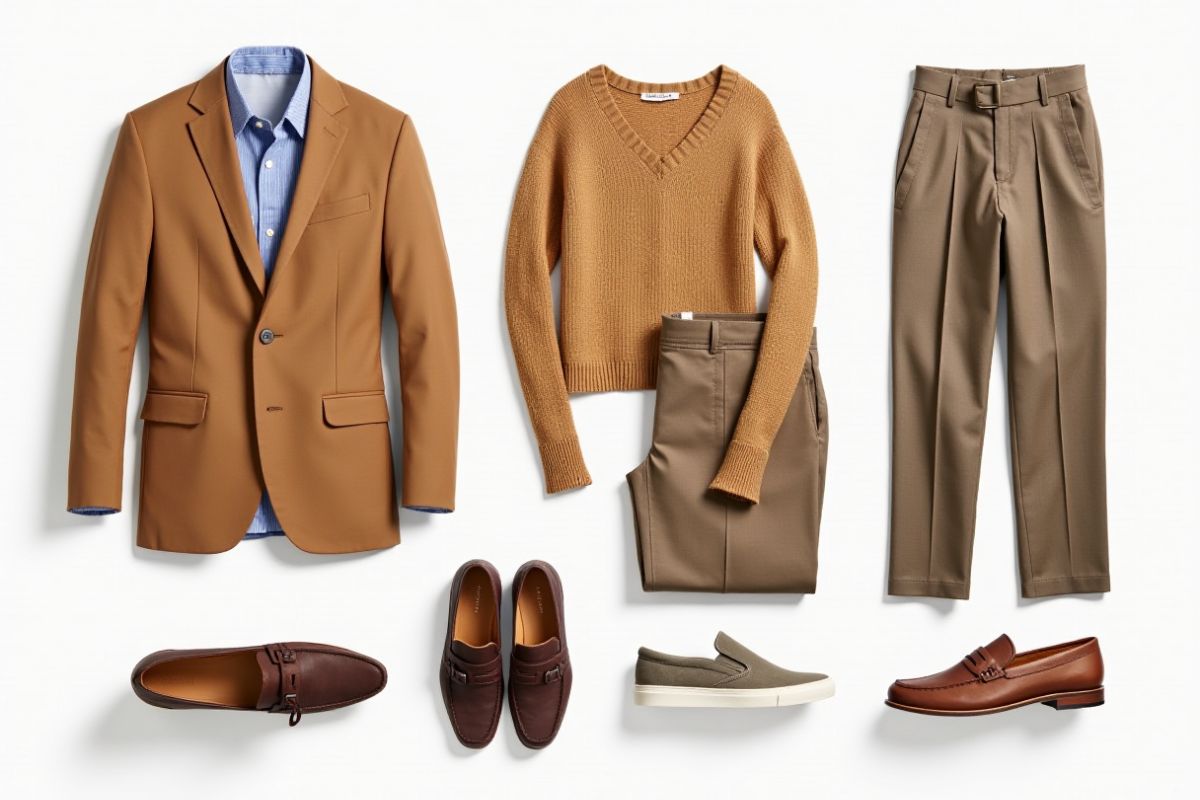
After: A soft charcoal double-breasted blazer, off-white wider trousers, an Oxford button-down shirt and suede loafers.
The overall look remains professional but instantly feels fresher, less restrictive and considerably more modern.
How to Style It (Work → Weekend)
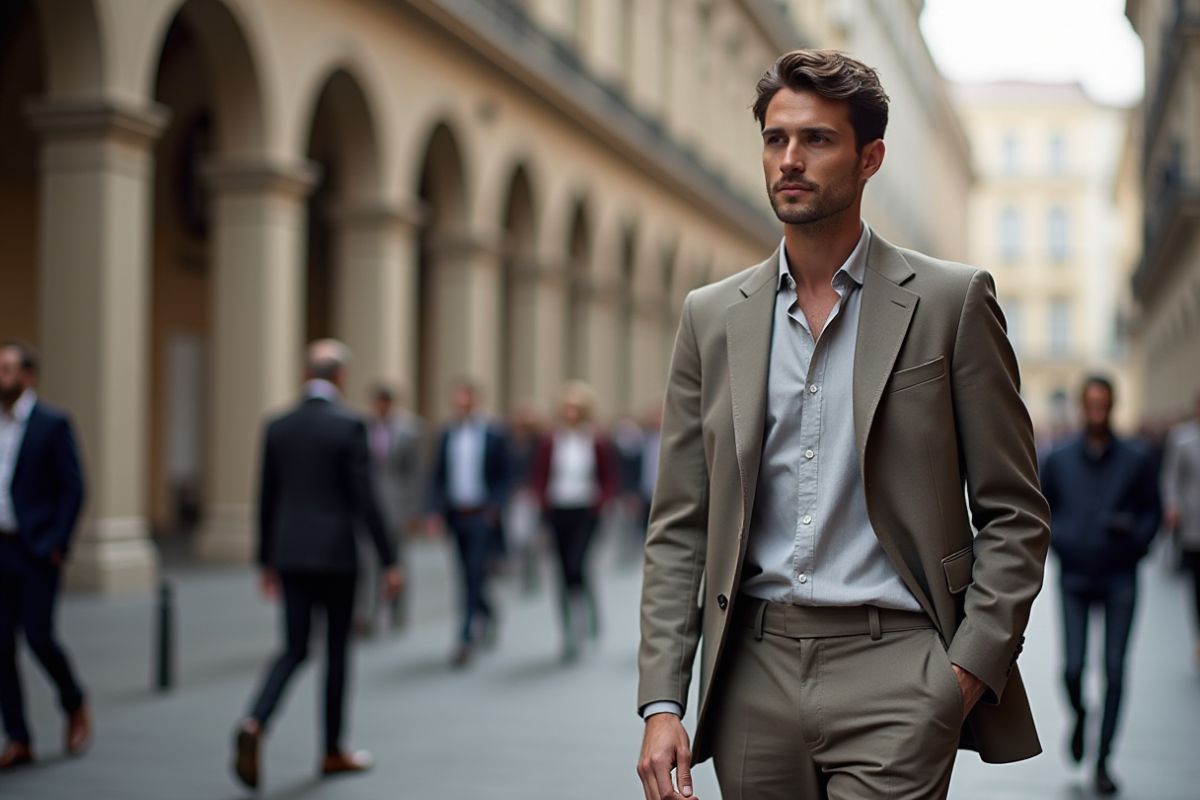
The biggest strength of soft tailoring is versatility.
With a few adjustments, the same suit can work across multiple occasions.
Office Style
For professional environments:
- Choose tonal colours
- Pair with crisp shirts
- Add leather loafers
- Keep accessories minimal
A soft tailoring approach delivers sophistication while maintaining authority in the boardroom.
Smart Casual Meetings
To reduce formality:
- Swap the dress shirt for a button-down Oxford
- Leave the tie at home
- Add suede loafers
- Experiment with earthy neutrals
This creates a polished appearance without feeling overdressed.
Weekend Dressing
For effortless off-duty style:
- Wear the blazer separately
- Pair trousers with knitwear
- Add a lightweight turtleneck
- Layer with a wool coat during cooler months
The relaxed silhouette transitions seamlessly from work to leisure.
Evening Events
Try:
- Forest green tailoring
- Rich jewel tones
- Textured herringbone fabrics
- Double-breasted jackets
The result feels elevated while remaining approachable.
Saveable Style Formula: The 2026 Soft Tailoring Uniform
If you're building a wardrobe around this trend, start here:
- Relaxed blazer with natural shoulders
- Wide-leg wool trouser
- Oxford button-down shirt
- Fine-gauge turtleneck
- Brown suede loafers
- Wool coat in camel or charcoal
- Tonal colour palette
This simple formula delivers maximum versatility while maintaining timeless appeal.
Common Soft Tailoring Mistakes to Avoid
Even the best suit can lose its impact if proportions aren't balanced.
Avoid:
- Oversizing every piece
- Combining multiple bold patterns
- Choosing fabrics without structure
- Neglecting proper fit through the chest and shoulder
- Wearing trousers that pool excessively
Soft tailoring should feel relaxed, not sloppy.
The goal is refinement with comfort.
Expert Insight: Where Tailoring Is Heading Next
One of the most interesting developments in tailoring in 2026 is the growing focus on personalisation.
Made-to-measure services are becoming increasingly accessible, allowing wearers to personalise silhouettes, fabrics and finishes while maintaining the relaxed sophistication driving the trend.
My prediction? The future of menswear won't be defined by either ultra-casual dressing or strict formal wear. Instead, we'll continue to see a blending of the two, with softer tailoring becoming the default standard for modern professional style.
Frequently Asked Questions
Is soft tailoring suitable for formal occasions?
Yes. Soft tailoring retains the elegance of traditional suiting while introducing greater comfort and movement. A well-cut double-breasted suit in premium wool remains appropriate for many formal events.
What's the difference between soft tailoring and traditional tailoring?
Traditional tailoring relies on structured construction, padding and rigid shaping. Soft tailoring uses minimal internal structure, natural shoulders and fluid drape for a more relaxed silhouette.
Are wider trousers essential in 2026?
They aren't mandatory, but wider trousers are one of the defining elements of modern suits because they create balance, comfort and a contemporary shape.
Which colours are trending for soft tailoring?
Earthy neutrals, camel, charcoal, forest green and sophisticated tonal shades are dominating 2026 collections.
Can I wear soft tailoring to work?
Absolutely. Soft tailoring is particularly suited to today's business environments because it offers professionalism without feeling restrictive.
The Final Word
Soft tailoring isn't simply another seasonal trend. It's a reflection of how modern men want to dress: polished, comfortable and adaptable.
By combining relaxed silhouettes, breathable fabrics and thoughtful craftsmanship, the new generation of suits offers everything traditional tailoring promised, but with far greater versatility. Whether you're investing in a double-breasted blazer, experimenting with wider trousers or building a wardrobe around quiet luxury principles, soft tailoring proves that sophistication and comfort can coexist beautifully.
In 2026, the best suit isn't necessarily the sharpest one. It's the one that moves with you. And that's why soft tailoring is everywhere.