

There’s something different about winter mornings in 2026. Instead of racing out of bed at 5am, checking emails before breakfast and treating every waking moment as an opportunity for productivity, more people are choosing a slower pace. The rise of the slow living movement has transformed the way we think about the beginning of the day, replacing pressure and busyness with intention, wellbeing and a sense of calm. Across Australia and beyond, the idea of a slow morning routine has become less of a wellness trend and more of a cultural reset. People are discovering that how they spend the first hours of their day can shape their mood, focus and energy for everything that follows. In a world that once celebrated hustle culture above all else, slow mornings offer a different approach: one that values presence over performance and balance over constant achievement.
The Shift Away From Hustle Culture
For years, success was closely linked to early alarms, packed schedules and endless optimisation. Social media was filled with stories of CEOs waking at 5am, time-blocked calendars and highly structured routines designed to maximise productivity. But the conversation is changing.
A growing number of wellbeing experts are questioning whether constant busyness actually leads to better outcomes. Research continues to highlight the connection between chronic stress, burnout and reduced focus, prompting many people to reconsider the way they start their day.
Rather than trying to squeeze more into every minute, today's wellness-conscious professionals are looking for ways to reclaim their mornings.
The rise of remote work, hybrid schedules and a broader focus on mental health has accelerated this shift. Many people are discovering that slowing down doesn't mean achieving less. In fact, a more mindful start often creates greater clarity, stronger concentration and a more sustainable relationship with work and life.
This is where the concept of the slow morning resonates.
Instead of waking up and immediately entering autopilot, people are creating rituals that allow them to connect with themselves before responding to the demands of the outside world. The focus moves from urgency to intention.
The result? A calmer mindset, improved wellbeing and a more positive tone for the entire day ahead.
Why Slow Living Is Resonating Now
The popularity of slow living reflects a broader cultural desire for balance.
Many people have realised that constantly operating at maximum speed can leave little room for creativity, joy or reflection. The modern pursuit of intentional living encourages us to focus on what truly matters rather than simply staying busy.
A slow start to the day helps create space for those priorities.
It's not about doing less. It's about doing the right things with more awareness.
What a Slow Morning Looks Like

One of the reasons the trend has gained momentum is its flexibility. There is no single version of a perfect morning routine.
The idea of a slow morning looks different for everyone.
For some, it begins with a quiet moment watching the sun rise with a warm cup of coffee. For others, it might include stretching, reading, taking a short walk or preparing a nourishing breakfast before work.
What matters most is creating a routine that feels unhurried.
A typical slow morning routine might include:
- Avoiding checking your phone as soon as you wake
- Skipping the snooze button
- Opening the curtains and letting natural light enter the room
- Taking several deep breaths before leaving bed
- Spending a few minutes journaling
- Writing in a gratitude journal is a great way to shift perspective
- Enjoying the smell of coffee or tea without multitasking
- Preparing a healthy smoothie or nourishing breakfast
- Moving your body gently
- Taking time to think about the new day
- Creating a simple plan for the day ahead
These small rituals encourage people to start your day with intention rather than reacting to notifications and obligations.
One of the biggest changes involves avoiding the habit of reaching for your phone first thing in the morning.
Many people report feeling less anxious when they delay emails, headlines and social feeds for even 15 or 20 minutes.
That simple shift can transform the tone for the day.
The Winter Advantage
Winter naturally encourages a slower rhythm.
The cooler weather invites cosy routines, warm drinks and quieter mornings. While darkness can make it tempting to hit snooze, the season also offers an opportunity to create comforting rituals that support wellbeing.
Lighting a candle, reading a few pages of a book or sitting quietly while the kettle boils can turn an ordinary morning into a meaningful part of your daily routine.
Rather than fighting winter's pace, many people are learning to embrace it.
How to Build Your Routine
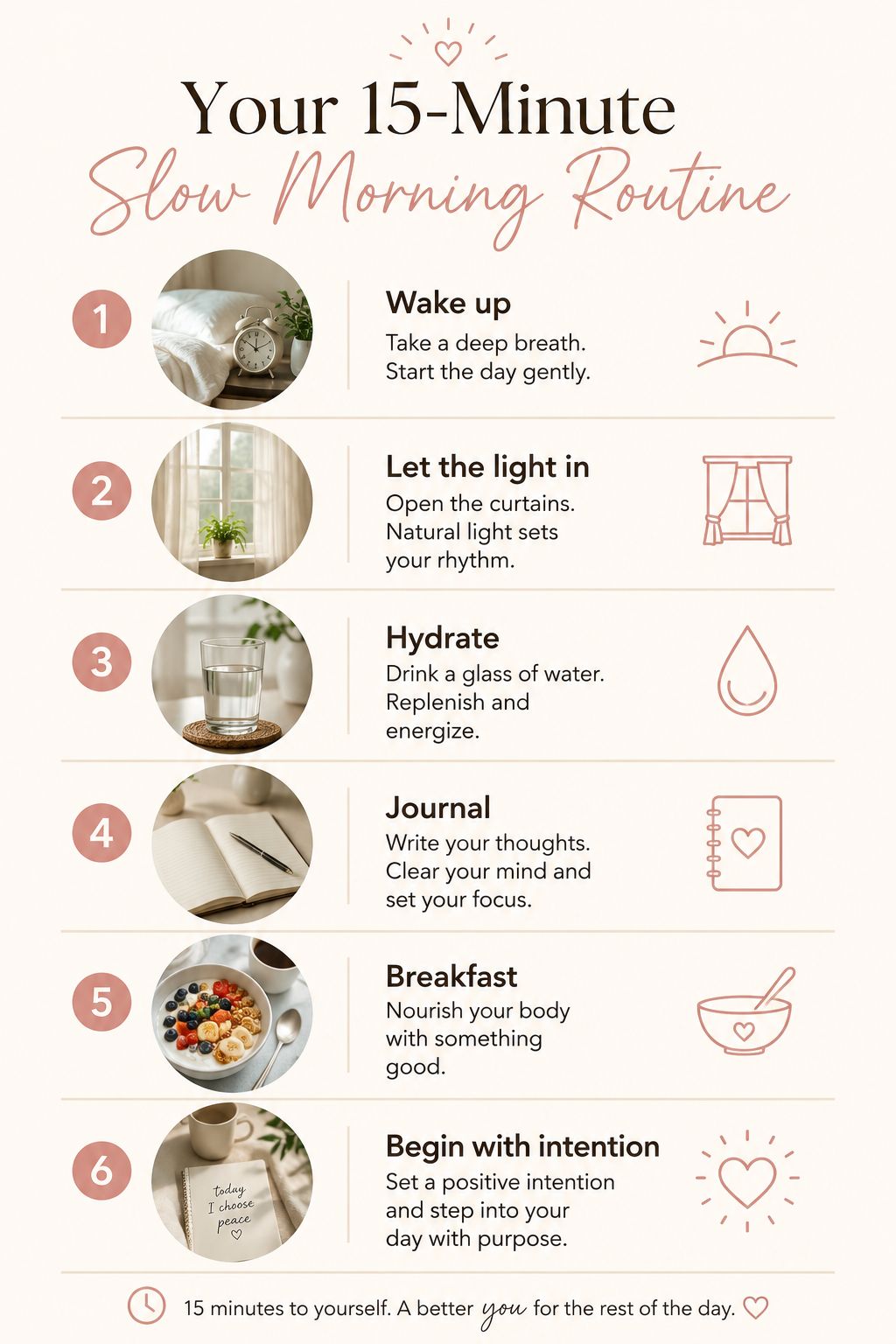
The best slow morning routine is one that feels realistic.
You don't need two spare hours or a perfectly curated schedule. Even waking up just 15 minutes earlier can make a noticeable difference.
The goal is not perfection. It's consistency.
1. Prepare the Night Before
A great morning often begins with going to bed well.
Simple preparation can reduce decision fatigue and eliminate the morning rush. Try to:
- Lay out my clothes for tomorrow morning
- Pack your bag before bed
- Make a list of important priorities
- Prepare breakfast ingredients
- Set your phone to minimise overnight distractions
These small tasks help create a smoother start to your day.
2. Create a Phone-Free Window
One of the most effective morning routine ideas is also one of the simplest. Avoid checking your phone for the first 15 to 30 minutes after waking.
Instead of immediately consuming information, use that time to connect with yourself. Read, stretch, meditate, breathe deeply or simply enjoy a quiet moment.
The difference can be surprisingly powerful.
3. Add One Meaningful Ritual
A morning ritual doesn't need to be elaborate. It could be:
- Five minutes of journaling
- A short walk around the block
- Making a coffee mindfully
- Writing down three things you're grateful for
- Taking time to jot down goals for the day
Choose something that feels restorative rather than productive. This is self-care, not another task to optimise.
4. Nourish Your Body
A healthy morning helps support both physical and mental wellbeing.
Whether it's eggs on toast, a bowl of oats or a fresh smoothie, eating a nourishing breakfast can help energize you for the hours of your day ahead.
Winter is also the perfect time for warming seasonal meals that feel comforting and satisfying.
5. Design a Realistic Routine
Many highly promoted routines fail because they're too ambitious.
The most successful routines fit naturally into your lifestyle.
Rather than planning an hour-long routine, start small.
Consider this simple framework:
| Time | Activity |
|---|---|
| 6:45 a.m | Wake up and let the light in |
| 6:50 a.m | Stretch and hydrate |
| 7:00 a.m | Journal and reflect |
| 7:10 a.m | Prepare breakfast |
| 7:25 a.m | Review priorities for the day |
| 7:30 a.m | Begin work or daily commitments |
This gentle structure helps create calm and clarity without becoming overly time-blocked.
Saveable Slow Morning Checklist
If you're interested in creating a slow morning routine, start here:
- Wake up without pressing the snooze button repeatedly
- Avoid reaching for your phone soon as you wake
- Open the curtains and let the light in
- Spend five minutes breathing or stretching
- Write in a gratitude journal
- Enjoy a nourishing breakfast
- Make a list of priorities
- Build in one enjoyable activity
- Focus on the present moment
- Begin your day with calm
Save this routine and revisit it tomorrow morning.
Remember, even one slow morning each week can have a noticeable impact on your mindset.
Frequently Asked Questions
What is a slow morning routine?
A slow morning routine is an intentional series of activities that helps you begin the day without rushing. It focuses on mindfulness, wellbeing and creating a sense of calm before engaging with work, technology and daily responsibilities.
Do I need to wake up at 5am to have a slow morning?
No. Contrary to popular belief, a successful morning routine does not require waking up at 5am. The goal is to create a routine that fits your lifestyle and allows you to start your day feeling refreshed and focused.
How long should a slow morning routine be?
A slow morning routine can be as short as 15 minutes. Even waking up 15 minutes earlier can provide enough time for journaling, stretching or enjoying breakfast without feeling rushed.
Does a slow morning improve productivity?
Many people find that a calmer beginning of the day helps improve focus, decision-making and overall productivity. By reducing stress and creating intentional habits, you may feel more prepared for the rest of your day.
What's the best first thing in the morning habit?
One of the most widely recommended habits is avoiding your phone first thing in the morning. Delaying notifications and social media can help reduce mental clutter and encourage a more mindful start.
A New Way to Begin
Perhaps the most appealing aspect of the slow morning trend is its simplicity.
It reminds us that the beginning of the day doesn't need to be rushed, optimised or filled with endless goals. Sometimes the most powerful thing we can do is pause.
To enjoy a calmer day, we don't necessarily need a longer to-do list or a more complicated system. We simply need a little more intention.
Whether it's taking a few extra moments to enjoy the smell of coffee, writing in a journal, preparing a nourishing breakfast or watching the winter sun rise, these quiet rituals shape the rest of our lives in subtle but meaningful ways.
In 2026, success is beginning to look different.
And increasingly, it starts with a slower morning.