
Are almost relationships still shaping modern dating in 2026? Explore why people stay in them, how dating trends have evolved, and how to navigate romantic ambiguity with clarity, confidence, and emotional safety.
The Modern Dating Question Everyone's Still Asking
Real talk: most people can spot a relationship, and most people can spot a casual fling. What remains surprisingly difficult to define in 2026 is everything in between.
Despite years of conversations about emotional availability, intentional dating, and healthy boundaries, the "almost relationship" has not disappeared. If anything, modern dating trends have made it easier than ever for two people to build a strong connection without ever clearly defining what it is.
You might be dating someone regularly, sharing emotional intimacy, speaking every day, acting like a couple, and even meeting each other's friends. Yet there is no clear label, no shared understanding, and no conversation about where things are heading.
So, are almost relationships still a thing in 2026?
The short answer is yes. But the reasons behind them are evolving.
Quick Signs You Might Be in an Almost Relationship
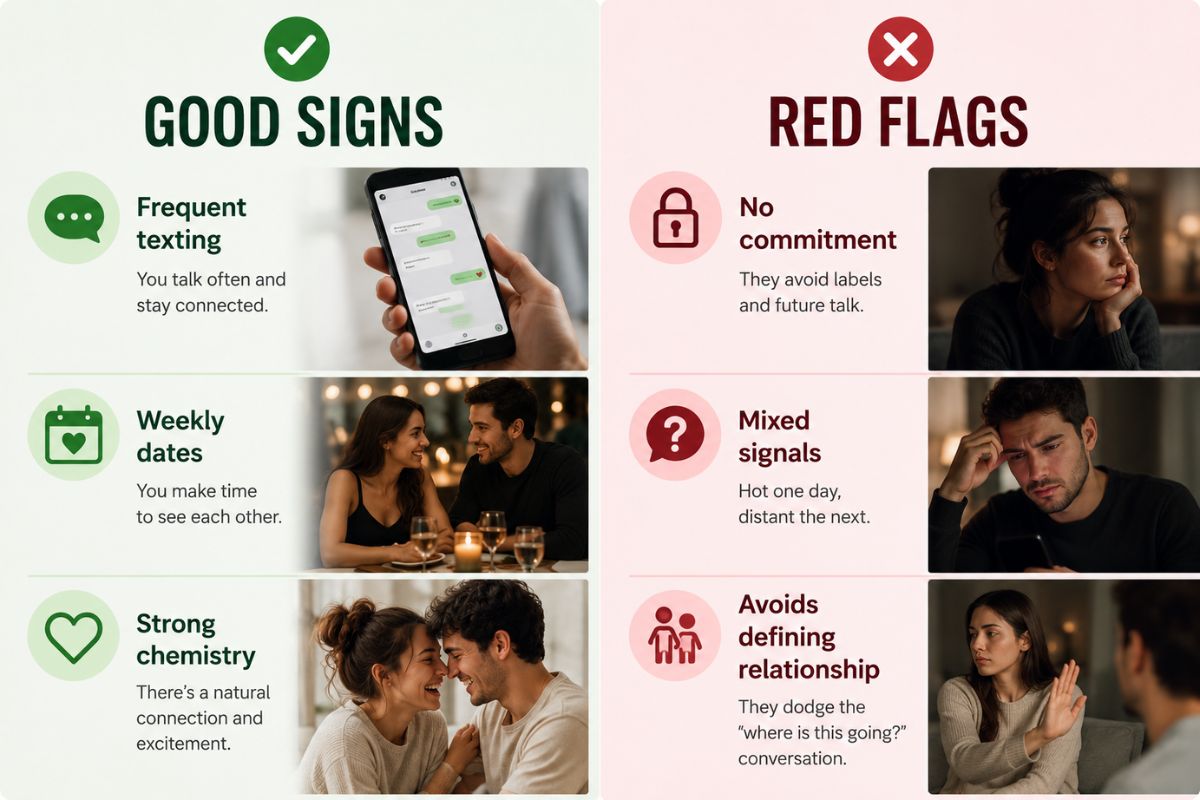
Save This Checklist You may be in an almost relationship if:
- You consistently go on a date together but avoid discussing exclusivity.
- One partner wants more clarity while the other avoids commitment conversations.
- There is strong chemistry and attraction but no agreed future.
- You communicate often yet remain uncertain about your status.
- You feel emotionally invested but lack emotional safety.
- The relationship feels romantic but undefined.
- Plans remain short-term despite a deep connection.
- Important conversations are repeatedly postponed.
If several of these sound familiar, you're not alone.
H2: Are They Still Happening?
Absolutely.
While dating culture continues to evolve, ambiguity remains a major feature of many modern relationships. Dating apps have transformed how people meet, but technology hasn't necessarily made emotional communication easier.
Apps such as Tinder and other popular platforms have expanded access to someone new at almost any moment. More choice can create more opportunities to connect, but it can also make some daters hesitant to fully commit to one partner.
In 2026, many singles are embracing intentional dating, yet almost relationships continue because emotional uncertainty often exists alongside genuine connection.
One widely discussed dating survey found that 42 percent of singles reported difficulty understanding another person's relationship intention early in the dating process. While people increasingly value authenticity and clear communication, many still struggle to express what they truly want.
Why the Trend Hasn't Disappeared
Several modern dynamics contribute to the continued rise of almost relationships:
- Increased emphasis on personal autonomy.
- Fear of rejection after previous heartbreak.
- Dating fatigue from years of app-based matching.
- Greater focus on individual growth and independence.
- Unhealed emotional wounds following a breakup.
- Anxiety around vulnerability and commitment.
The result is a dating trend where many people seek connection while simultaneously protecting themselves from emotional risk.
The 2026 Difference
The biggest difference compared with previous years is awareness.
In the past, people often remained in undefined situations without recognising the pattern. In 2026, most daters can identify an almost relationship quickly. Social media discussions, relationship experts, and wider conversations around emotional intelligence have created more self-awareness.
The challenge isn't recognising the situation.
The challenge is deciding what to do about it.
H2: Why People Stay in Them
If almost relationships create uncertainty, why do people remain in them?
The answer is rarely simple.
They Hope It Will Become a Real Relationship
Many people stay because there is genuine potential.
The connection feels authentic. The romance feels real. The attraction is mutual. The excitement is undeniable.
When emotions are involved, it's easy to assume that a label will eventually arrive naturally. Unfortunately, assumptions often create more confusion than clarity.
Fear of Rejection
For some, avoiding the relationship conversation feels safer than hearing an answer they may not like.
Asking:
"What are we?"
can feel incredibly vulnerable.
Yet avoiding the discussion can also prolong emotional uncertainty and make eventual rejection feel even more painful.
They Enjoy the Benefits Without the Responsibility
Not every almost relationship involves bad intentions.
Some people sincerely enjoy companionship, intimacy, and emotional support but aren't ready for a full partnership.
They may have recently experienced a breakup. They may be prioritising career goals. They may simply be unsure whether the relationship is right for them.
The problem emerges when those intentions aren't communicated openly.
Avoidant Attachment Patterns
Relationship researchers frequently note that individuals with avoidant tendencies can struggle with emotional closeness.
This doesn't mean they're incapable of love. It means vulnerability can trigger discomfort. As a result, they may seek connection while resisting commitment, creating a confusing dynamic for the other person.
Social and Cultural Shifts
Modern dating culture increasingly encourages exploration, personal growth, and flexibility. Those are positive developments.
However, they can also create situations where people delay defining romantic relationships because they fear limiting future possibilities.
The result is often prolonged ambiguity rather than conscious decision-making.
H2: How to Navigate Them
If you find yourself in an almost relationship, the goal isn't necessarily to force a label. The goal is achieving clarity.
Start With Your Own Needs
Before having a conversation with your partner, get honest with yourself. Ask:
- Am I comfortable with a casual arrangement?
- Do I want exclusivity?
- Am I looking for a boyfriend or girlfriend?
- Do I want a long-term partnership?
- What would make me feel emotionally safe?
Self-awareness is essential because you cannot communicate your needs if you haven't identified them first.
Prioritise Clear Communication
Many relationship problems grow from silence rather than conflict.
If you want clarity, communicate directly.
Try:
"I've really enjoyed getting to know you, and I'd love to understand what you're looking for."
This approach focuses on curiosity rather than pressure.
Healthy communication creates opportunities for honesty and mutual understanding.
Listen to Actions, Not Just Words
Words matter.
Consistency matters more.
If someone says they want a future relationship but repeatedly avoids meaningful discussions, pay attention to the behaviour.
A shared understanding requires both intention and action.
Set Healthy Boundaries
Boundaries aren't ultimatums.
They're expressions of self-respect.
For example:
- Defining what exclusivity means to you.
- Deciding how long you're willing to remain in uncertainty.
- Recognising behaviours that create emotional distress.
- Protecting your emotional wellbeing.
Healthy boundaries support stronger relationships, whether they become long-term partnerships or not.
Accept the Answer
Sometimes clarity leads to a positive outcome.
Sometimes it doesn't.
Someone may tell you they only want something casual. They may not be ready for commitment. They may not see long-term compatibility.
While disappointing, clarity is often kinder than ongoing confusion.
A difficult truth is usually easier to navigate than endless uncertainty.
Don't Ignore Emotional Safety
One of the defining relationship lessons of the new year is that emotional safety matters just as much as chemistry.
A strong romantic connection without trust, transparency, or alignment can become emotionally exhausting.
Healthy romantic relationships typically include:
- Honest communication.
- Mutual respect.
- Shared values.
- Consistent effort.
- Emotional availability.
- Clear expectations.
If these elements are missing, the relationship may remain surface-level regardless of how strong the attraction feels.
Expert Insight: The Real Issue Isn't Labels
One of the biggest misconceptions in modern dating is that labels are the main problem.
They're not.
The real challenge is misalignment.
Two people can casually date and be perfectly happy when expectations match.
Likewise, two people can enter a committed relationship and still struggle if their intentions differ.
The healthiest relationships in 2026 are not necessarily the fastest-moving ones.
They're the most intentional.
People who communicate openly, define expectations early, and remain authentic about their needs are often better positioned to build meaningful connections.
Frequently Asked Questions
What is an almost relationship?
An almost relationship is a romantic connection that resembles a committed relationship but lacks clear definition, exclusivity, or agreed expectations.
Are almost relationships toxic?
Not automatically. They become toxic when communication is poor, expectations are hidden, or one person knowingly creates false hope.
Why do people avoid defining a relationship?
Common reasons include fear of rejection, previous heartbreak, uncertainty about compatibility, desire for autonomy, or avoidant attachment patterns.
Can an almost relationship become a real relationship?
Yes. Many committed relationships begin in ambiguous stages. The difference is whether both people eventually communicate their intentions and agree on a shared direction.
How long should you stay in an almost relationship?
There is no universal timeline. However, if ongoing ambiguity is causing anxiety, frustration, or emotional distress, it may be time to have a direct conversation about expectations.
Is dating in 2026 becoming more intentional?
Many dating trends suggest that singles increasingly value authenticity, emotional intelligence, and clear communication. However, ambiguity remains common, particularly in app-based dating environments.
Final Thoughts
Almost relationships are still very much a reality in 2026, but the conversation around them has matured.
People are becoming more conscious of their needs, more intentional about their choices, and more willing to communicate openly about what they want from romance.
The healthiest path forward isn't demanding certainty from someone else. It's creating clarity within yourself first.
Know your boundaries. Be honest about your intention. Communicate with confidence. And remember: a genuine connection should not leave you constantly questioning where you stand.
The right relationship isn't defined solely by a label.
It's defined by mutual respect, emotional safety, clear communication, and two people choosing each other intentionally