

In 2026, relationships are more connected—and more complicated—than ever. Between constant digital access, demanding work hours, and evolving expectations in dating, many people feel overwhelmed and emotionally drained. One powerful skill continues to stand out as essential for a healthy relationship: relationship boundaries.
Healthy boundaries aren’t about building walls. They’re about creating balance, safety, and respect—so both people can thrive. Whether you’re navigating a new relationship, strengthening intimate relationships, or reassessing family relationships, learning boundary setting is a practical way to build trust, improve communication, and protect your emotional well-being.
What Are Relationship Boundaries, and Why Do They Matter?
Boundaries define what is acceptable and what isn’t in every relationship. They ensure your needs are met without crossing into control, disrespect, or codependent patterns.
Boundaries are essential because they:
- Help you feel safe and respected
- Protect your physical well-being and emotional boundaries
- Prevent resentment and emotional exhaustion
- Support self-care and self-awareness
When boundaries are weak or unclear, people may feel guilty, drained, or taken advantage of. Unhealthy boundaries often show up as saying “yes” when you want to say “no,” oversharing, or allowing others to take up too much personal space.
Different Types of Boundaries in Relationships
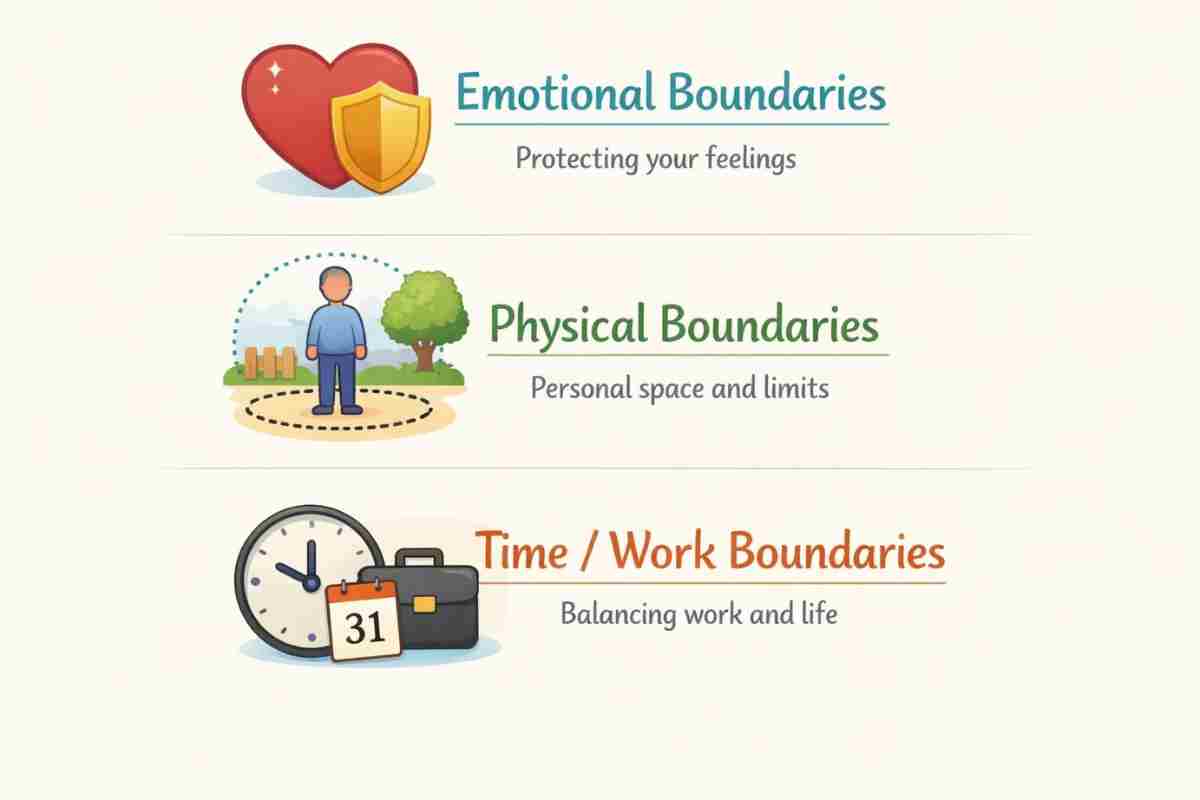
Understanding the different kinds of relationships in your life helps clarify the types of boundaries you may need.
1. Emotional Boundaries
Healthy emotional boundaries mean taking personal responsibility for your feelings without managing your partner’s emotions. People with poor boundaries may feel responsible for their romantic partner’s happiness or disagreement avoidance.
Healthy emotional boundaries help you:
- Express feelings respectfully
- Avoid emotional burnout
- Stay connected without losing yourself
2. Physical Boundaries
Physical boundaries help define comfort levels with physical intimacy and personal space. What feels close for comfort to one person might feel overwhelming to another.
These may change over time—especially in a new relationship.
3. Time and Work-Life Boundaries
Boundaries at work influence your romantic relationships more than you might realise. Without clear work-life limits, emotional availability disappears quickly.
Examples include:
- Setting clear work hours
- Protecting alone time
- Limiting after-hours messages
4. Communication Boundaries
Sometimes, you need to set a boundary around how and when conversations happen—especially during conflict.
Examples:
- “I don’t want to talk when voices are raised.”
- “Let’s take a moment and revisit this later.”
Signs Boundaries Are Missing or Unhealthy

You might need to create healthy boundaries if you:
- Feel resentful or emotionally exhausted
- Feel guilty or selfish for needing space
- Feel like you’re always adjusting your needs
- Have low self-esteem around expressing boundaries
- Feel disrespected after you’ve set boundaries
Weak boundaries can slowly turn a healthy relationship into one that feels unsafe or unbalanced.
How to Set Healthy Boundaries Without Guilt
Boundary setting might feel uncomfortable at first. Many people worry their partner may feel rejected or upset. That discomfort is normal—and temporary.
1. Start With Self-Awareness
Take a moment to ask:
- Where do I feel drained?
- What behaviour crosses my limits?
- What do healthy boundaries look like for me?
Your boundaries in relationships should reflect your values—not fear of conflict.
2. Communicate Your Needs Clearly
Use calm, respectful language:
- “I need downtime after work to feel relaxed.”
- “I care about you, but I need personal space right now.”
Clear boundaries reduce confusion and improve communication skills.
3. Expect Adjustment—Not Perfection
Your partner may need time to adapt. Boundaries can change as relationships evolve, especially when setting a new boundary.
Setting boundaries in relationships is a skill built through consistency—not one conversation.
4. Learn to Say “No” Without Overexplaining
Saying “no” is not selfish. It’s how you protect your emotional well-being and maintain healthy boundaries.
Boundaries in Romantic Relationships

In romantic relationships, boundaries create emotional safety and trust. They ensure both partners feel heard, respected, and valued.
Healthy boundaries in a relationship might include:
- Respecting alone time
- Honouring privacy with devices or messages
- Mutual agreement on physical intimacy
- Supporting each other’s needs without control
Boundaries also help prevent codependent dynamics, where one person’s identity revolves around the other.
Maintaining Healthy Boundaries Over Time
Setting boundaries is only the first step—you must set and maintain healthy boundaries consistently.
To maintain healthy boundaries:
- Revisit them during life changes
- Adjust boundaries that may not be appropriate anymore
- Reinforce them calmly if crossed
Effective boundaries are flexible but firm. They protect relationships rather than harm them.
Why Healthy Boundaries Strengthen Every Relationship
Boundaries ensure respect, trust, and emotional balance across every relationship—romantic, family, or professional.
They:
- Reduce conflict and misunderstanding
- Support physical and emotional health
- Create space for growth and connection
In 2026, stronger relationships aren’t built by overgiving—they’re built by clarity, respect, and communication.
Final Thoughts
Healthy boundaries in relationships are not about pushing people away. They’re a way to build deeper trust, mutual respect, and emotional security.
If you want to feel safe, connected, and fulfilled in your relationships, boundaries are not optional—they’re essential.
Start small. Stay consistent. And remember: every healthy relationship begins with honouring your own needs.