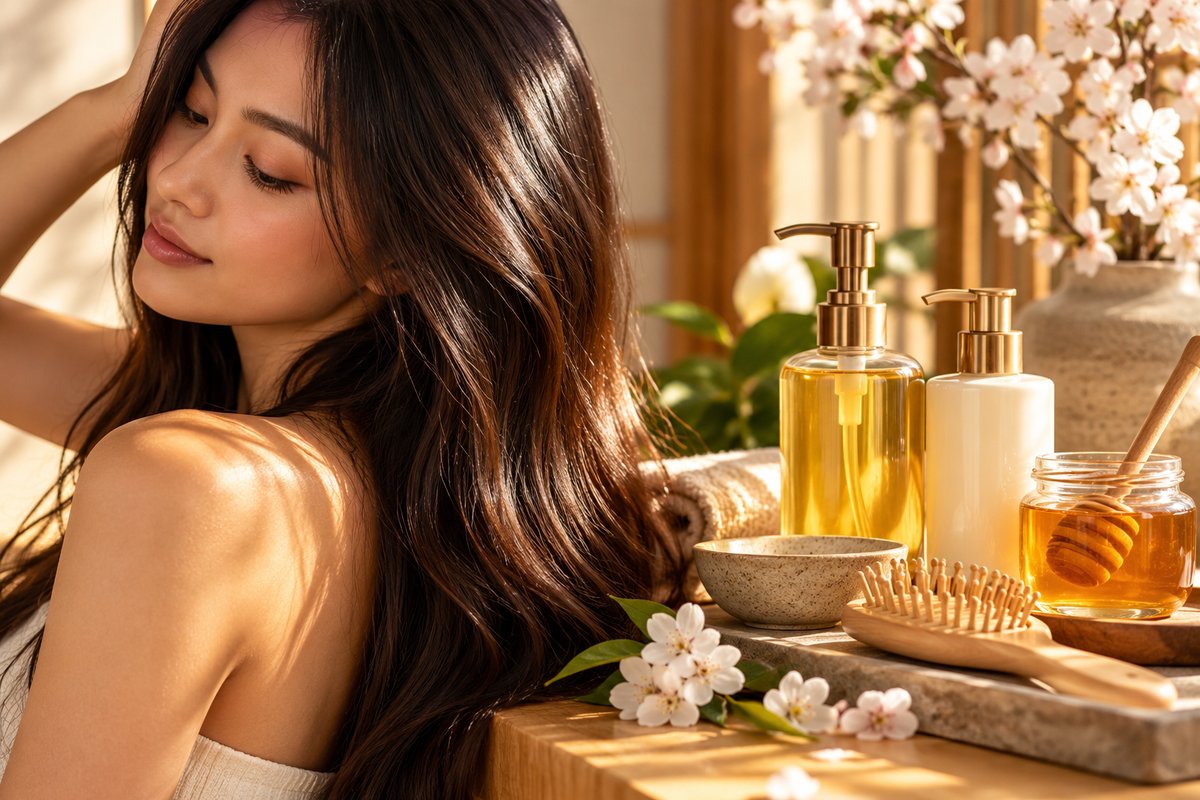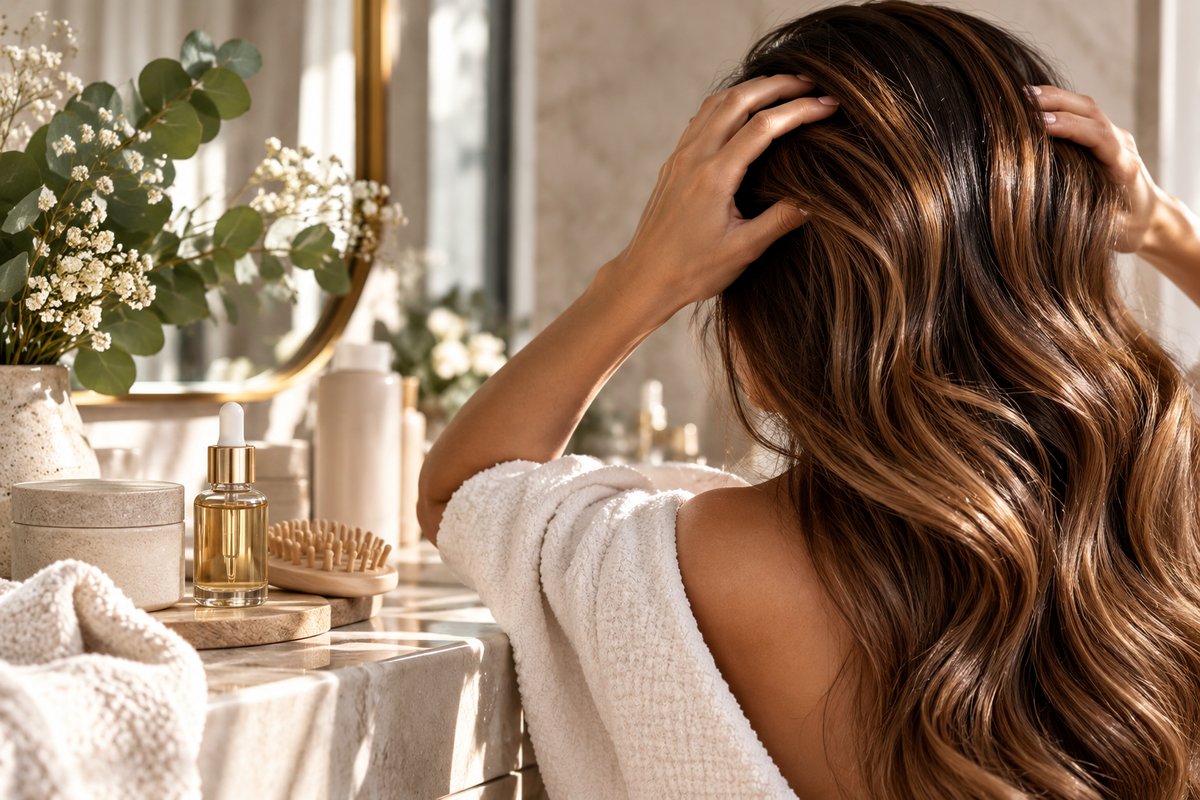
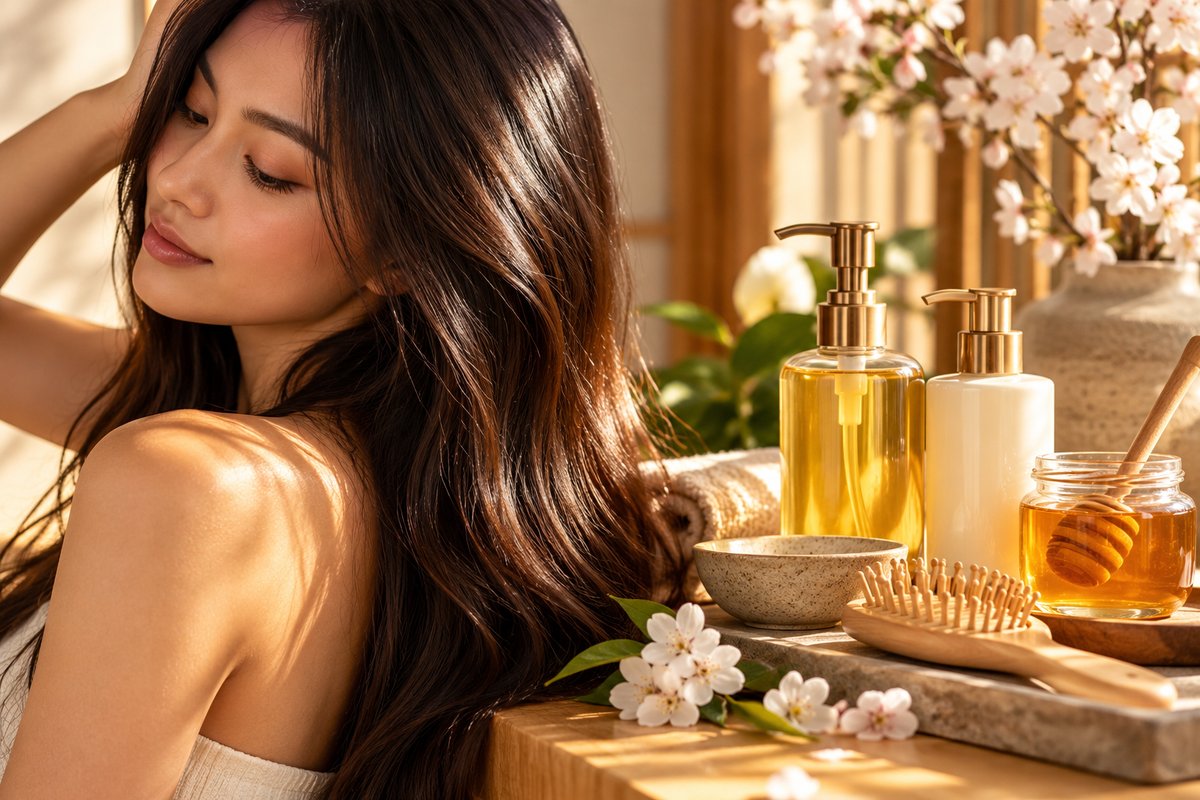
Japanese beauty has shaped skincare routines around the world. Now shampoos, treatments, oils and scalp-focused rituals are becoming a more visible part of the J-beauty conversation.
For many international beauty shoppers, J-beauty first meant facial care: lightweight sunscreens, cleansing oils, hydrating lotions and carefully layered routines. Haircare was always part of Japan's beauty landscape, but it rarely received the same attention outside the country.
That may be changing.
Japanese hair products are appearing more often in beauty hauls, specialist retailers and online conversations. The latest signal comes from &honey, which has expanded into Ulta Beauty in the United States after launching online and across approximately 600 stores in September 2026.
The retail expansion is a useful news hook, but the bigger story is not one brand or one American launch. It is the growing international appetite for haircare that feels considered, sensorial and built around a complete routine rather than a single problem-solving product.
Why Japanese haircare is attracting international attention
J-beauty has long been associated with consistency, thoughtful formulation and rituals designed to be repeated rather than constantly replaced. Those qualities translate naturally to haircare.
Instead of treating shampoo as a basic cleansing step and conditioner as an optional extra, many Japanese routines give equal attention to cleansing, conditioning, targeted treatments, scalp care and finishing products.
The appeal is partly practical. Consumers are becoming more aware that different concerns may require different approaches: a dry scalp is not the same as dry ends, colour damage is not the same as humidity-related frizz, and a heavy mask will not suit every hair texture.
It is also emotional. A coordinated routine can turn an ordinary shower into a small beauty ritual, especially when texture, fragrance and packaging make the process feel deliberate.
&honey is the current news hook
&honey's international expansion places a recognisably Japanese haircare concept inside a large mainstream beauty retailer.
According to the brand's announcement, its Ulta Beauty range includes products from the Deep Moist and Melty Moist Repair collections, organised as three-step routines of shampoo, treatment and hair oil.
The brand positions moisture as the connecting idea across those steps. It also says its formulas combine honey with botanical extracts and haircare technology.
Those details help explain why the range may stand out on an international shelf, but they should remain in perspective. Honey-inspired branding and a multi-step system do not automatically make a formula right for every person, and a brand's description of softness, smoothness or hydration is not independent proof of a particular result.
The more useful takeaway is that a moisture-focused Japanese routine is being presented to a much wider audience. That visibility can encourage shoppers to explore the category beyond one label.
Haircare is borrowing the language of skincare
The rise of Japanese haircare also fits a wider change in beauty: hair and scalp routines are increasingly being discussed in the same language as skincare.
Consumers now hear about cleansing without over-stripping, moisture balance, barrier support, exfoliation, serums and layering in relation to the scalp and hair. Fashion Weekly's guide to why scalp care is becoming the new skincare explores how that shift has moved attention from the visible lengths to the skin beneath them.
That does not mean the scalp should simply receive every active ingredient used on the face. Hair and scalp products have their own formulation requirements, and irritation, persistent flaking or sudden hair changes may need professional advice rather than another cosmetic step.
It does mean shoppers are asking more precise questions. Is the scalp oily while the ends are dry? Does a styling routine create buildup? Is a product intended for the scalp, the hair shaft or both?
Our recent guide to scalp serums makes the same distinction: targeted products can have a place, but ingredients, instructions and realistic expectations matter more than trend-driven promises.
The appeal of a multi-step ritual
A multi-step hair routine can sound excessive, but it does not have to mean a crowded bathroom shelf.
The basic logic is sequencing. Shampoo cleanses. A conditioner or treatment addresses the lengths. An oil or finishing product may help with feel, shine or manageability. A scalp product, when genuinely needed, serves a different purpose again.
Japanese haircare's international appeal may lie in making that sequence feel coherent. Products are often presented as parts of a system, encouraging consumers to think about how each step fits rather than collecting unrelated launches.
There is a useful lesson here even for shoppers who prefer a simple routine: choose steps for a reason. More products do not guarantee better hair, and using too many rich formulas can leave some textures feeling heavy or coated.
Fashion Weekly Tip: Before copying a multi-step Japanese haircare routine, identify whether your main concern is the scalp, the mid-lengths or the ends. Add one targeted step at a time and follow the product directions so you can tell what genuinely suits your hair.
Why Australian shoppers are discovering more Japanese brands
Australian beauty consumers no longer have to wait for every international brand to secure a major local retail launch before discovering it.
Travel, Japanese beauty stores, specialist online retailers, social platforms and global beauty communities all expose shoppers to products that were once difficult to find outside Japan.
K-beauty's success has also made consumers more comfortable looking beyond familiar Western labels. Fashion Weekly's overview of K-beauty trends shows how layered routines and haircare innovation can travel internationally through digital discovery. J-beauty is distinct from K-beauty, but both have helped broaden the beauty map.
For Australian shoppers, access still requires care. A product trending overseas may have different packaging, instructions or availability here. Prices can vary significantly, and marketplace listings do not always come from authorised sellers.
Before ordering, check the ingredient list, seller, returns policy and whether the product is intended for your hair type and concern. If local distribution is unclear, confirm that the product is genuine and appropriately labelled rather than relying on a viral recommendation alone.
A category trend is bigger than one brand
&honey's expansion is a sign of growing visibility, not proof that every Japanese hair product is innovative or effective.
J-beauty is an umbrella term, not a quality guarantee. Japanese brands vary in price, formulation, purpose and evidence just as brands from any other market do.
The broader trend is more meaningful: international retailers and consumers are paying closer attention to Japanese approaches to moisture, scalp care, cleansing and ritual. That creates room for more brands to enter the conversation and for shoppers to compare philosophies rather than treating one release as representative of an entire country.
It also encourages a welcome shift away from miracle language. Haircare is often most useful when it supports comfort, manageability and the condition of the hair over time, not when it promises a dramatic transformation from one fashionable ingredient.
The Fashion Weekly view
Japanese haircare may be having its international moment, but its lasting influence will depend on more than beautiful bottles or social-media visibility.
The strongest part of the trend is the idea of intention: understanding what the scalp needs, what the lengths need and why each step belongs in the routine.
&honey's expansion gives that idea a larger stage. Whether the brand itself suits an individual shopper is a separate question, one that should be answered through ingredients, directions, hair type and experience rather than the J-beauty label alone.
After skincare, haircare is a natural next chapter for Japanese beauty influence. The most promising version of that chapter is not a ten-step routine for everyone. It is a more thoughtful one.