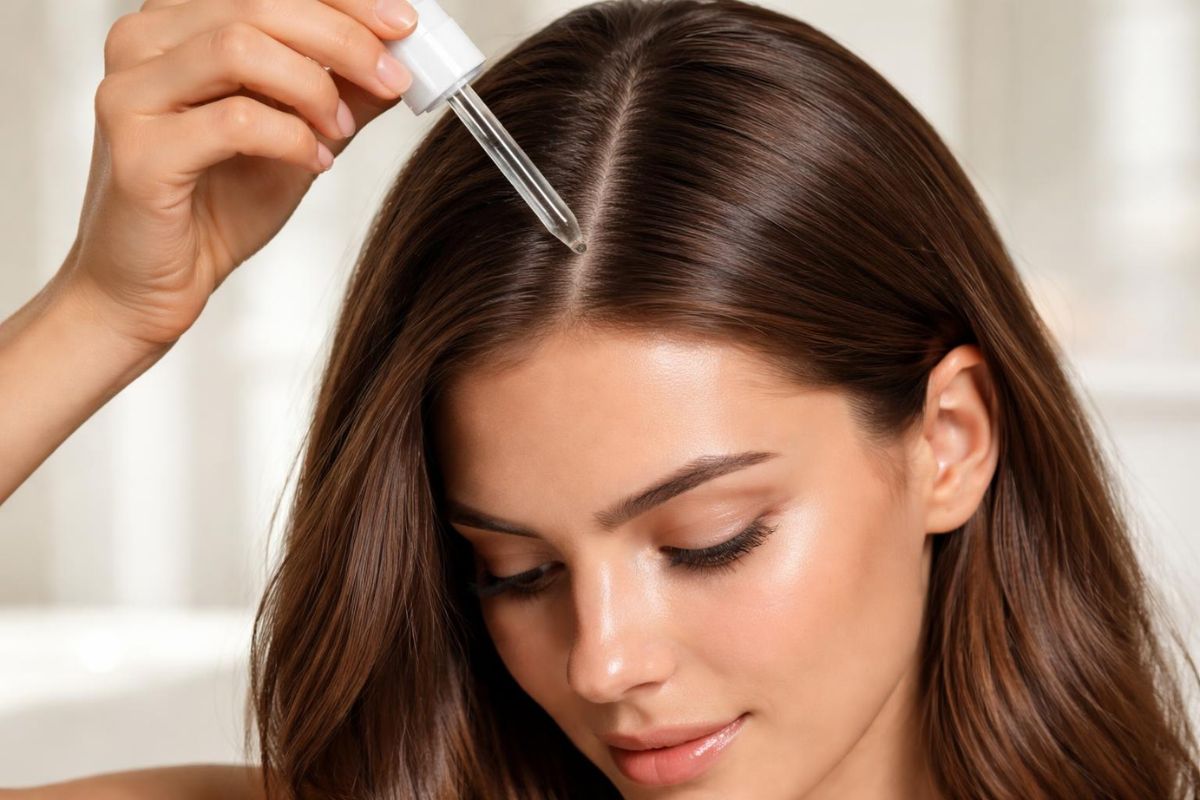
Healthy hair starts with a healthy scalp. As beauty routines become increasingly skin focused, the scalp is finally getting the same attention we've long given our complexions. From niacinamide-infused treatments to peptide-rich formulas, scalp serums are quickly becoming one of the most talked-about additions to modern hair care.
If you've wondered whether a scalp serum is genuinely useful or simply another beauty trend, the answer sits somewhere between science and expectation. While no serum can magically transform hair overnight, the right formula can support scalp health, improve comfort, enhance hydration, and create a healthier environment for hair growth. Here's what experts want consumers to know before adding one to their routine.
Why Everyone Is Suddenly Talking About Scalp Health
Search interest in scalp care has exploded over recent years, reflecting a broader shift towards holistic beauty. Dermatologists frequently compare the scalp to facial skin because both are living tissues with unique needs.
When the scalp experiences dryness, excess oil production, irritation, product build-up, or environmental stress, hair quality can be affected over time. A compromised scalp barrier may contribute to discomfort, visible flakes, scalp itchiness, or weakened hair.
As a result, brands are increasingly developing specialised treatments designed to support scalp health rather than focusing solely on the hair shaft.
A scalp serum is a leave-in treatment formulated to improve scalp health through hydration, soothing ingredients, barrier support, and targeted active ingredients.
What Scalp Serums Actually Do
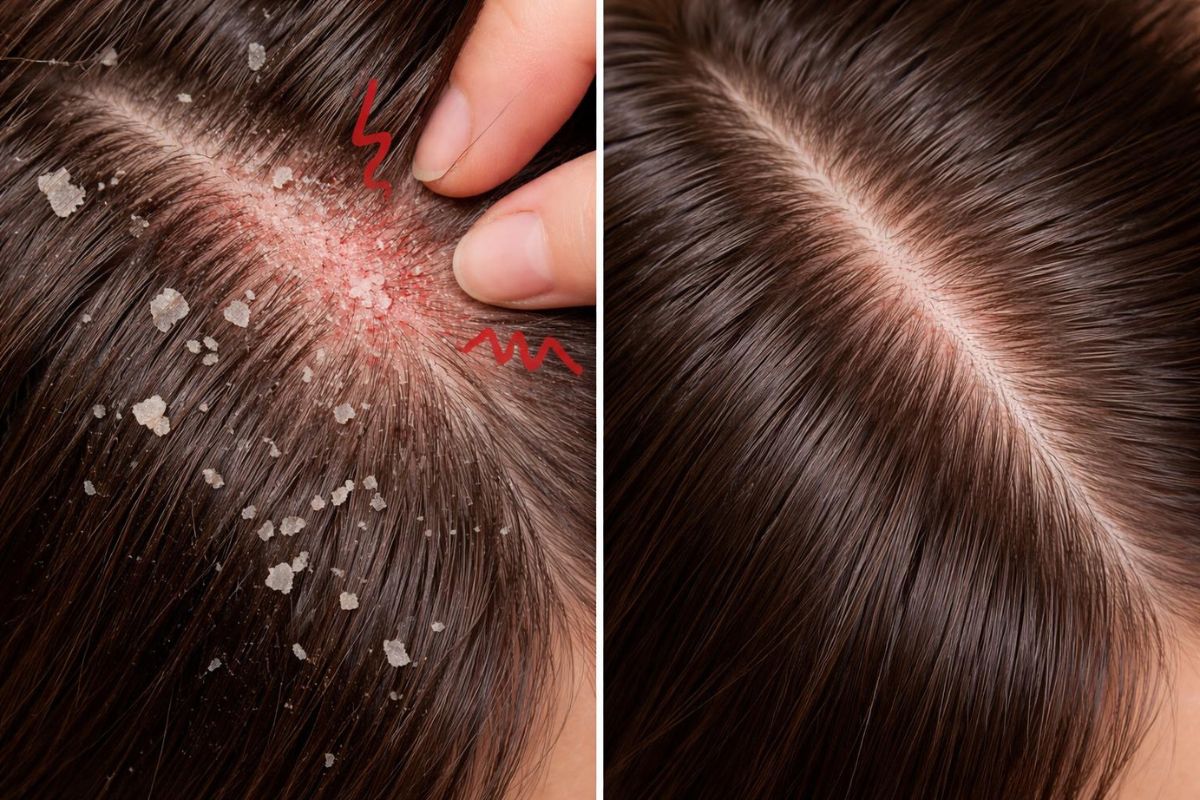
Unlike a traditional hair serum, which primarily smooths and protects lengths, a scalp serum is a targeted scalp treatment applied directly to the skin of the scalp.
Most formulas are designed to:
- Improve scalp hydration
- Soothe an itchy scalp
- Reduce feelings of irritation
- Support the scalp barrier
- Nourish the scalp
- Balance excess oil
- Help create an optimal environment for hair growth
- Support overall scalp health
Many products come in lightweight, non-greasy formulas with a precision dropper, making them easy to apply directly where needed.
Dermatologists generally point out that healthier scalp conditions may indirectly improve hair appearance because follicles function best when the surrounding skin is healthy and balanced.
However, it's important to separate evidence from marketing. While some ingredients help reduce hair shedding associated with scalp stress, few cosmetic products are proven to significantly reverse genetic hair loss.
How to Apply a Scalp Serum Correctly
For the best results:
- Part hair into sections.
- Apply a few drops directly onto the scalp.
- Massage gently for one to two minutes.
- Leave in unless instructed otherwise.
- Use consistently.
Most formulas can be applied to wet or dry hair, while others recommend damp or dry application depending on their ingredient blend.
Which Scalp Serum Ingredient Is Right For You?
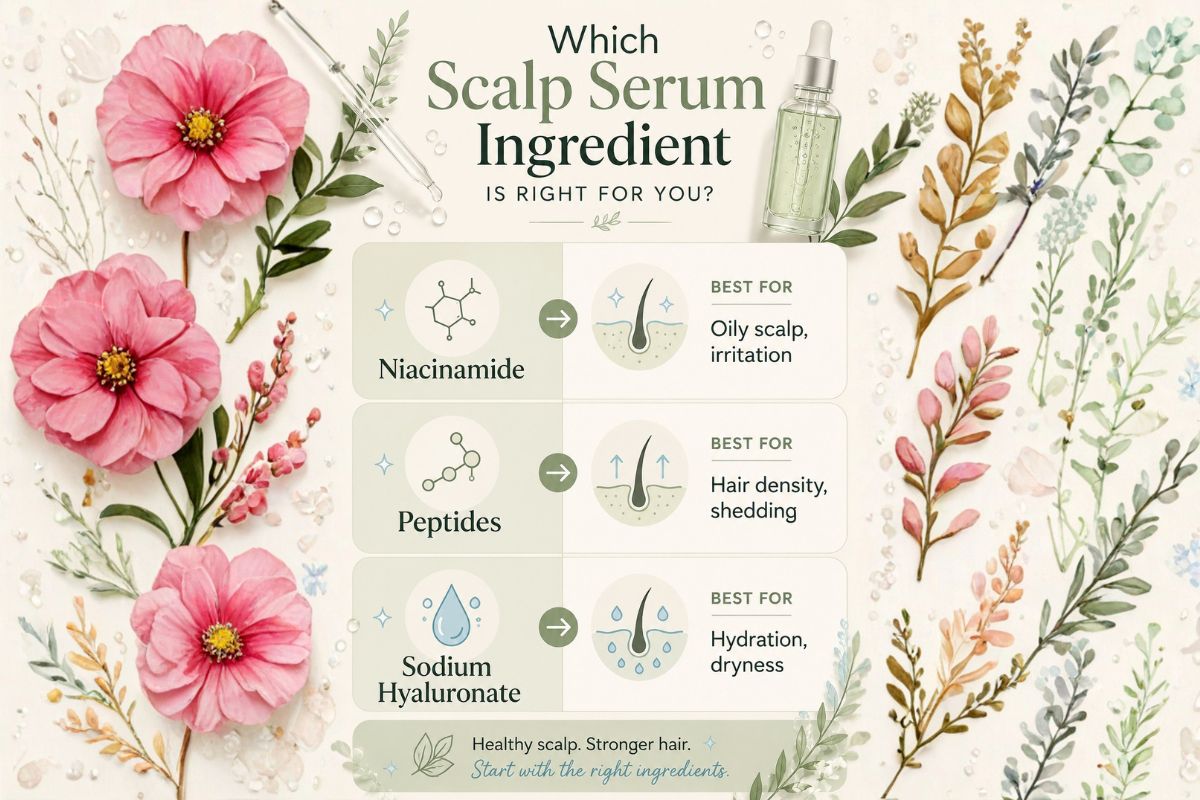
Not all scalp serums are created equal. Understanding the ingredient list is often more important than selecting the most expensive bottle.
Niacinamide
Niacinamide has become one of skincare's most celebrated ingredients and is now appearing in many scalp products.
Benefits may include:
- Supporting the scalp barrier
- Helping reduce visible redness
- Improving scalp hydration
- Regulating oil production
- Helping soothe an irritated scalp
For those dealing with an oily scalp or mild irritation, niacinamide can help create a more balanced environment without contributing to excess residue.
Many dermatologists view niacinamide as one of the most versatile barrier-supporting ingredients available because it offers multiple benefits while remaining suitable for most hair types.
Ingredient Spotlight: Niacinamide
✅ Barrier support
✅ Oil control
✅ Scalp comfort
✅ Hydration support
✅ Suitable for most scalp types
Peptides
Peptides are among the most popular active ingredients in modern scalp care.
These amino acid chains are frequently included in formulas designed to support stronger-looking hair and improve the appearance of fullness.
Consumers often encounter products such as the Ordinary Multi-Peptide Serum, which uses peptide technology to support the appearance of hair density.
Potential benefits include:
- Supporting scalp circulation
- Helping maintain follicle health
- Strengthening the appearance of weakened hair
- Improving the look of thinning hair
- Supporting fuller hair over time
Although peptides show promising cosmetic benefits, expectations should remain realistic. Results are generally gradual and depend on factors including genetics, age, lifestyle, and overall scalp condition.
Ingredient Spotlight: Peptides
✅ Hair density support
✅ Appearance of thicker hair
✅ Follicle support
✅ Scalp conditioning
✅ Long-term maintenance
Hydration-Focused Formulas
One of the fastest-growing scalp categories involves hydration-first formulas.
These products often contain:
- Sodium hyaluronate
- Caprylyl glycol
- Benzyl alcohol
- Botanical moisturisers
- Humectants
Hydrating serums are particularly popular among individuals experiencing:
- Dry scalp
- Seasonal dryness
- Tightness
- Flaking unrelated to medical conditions
- Environmental stress
A hydrated scalp is generally more comfortable and resilient, making hydrating scalp products a sensible choice for many consumers.
Ingredient Spotlight: Hydration Heroes
Sodium Hyaluronate
A moisture-binding ingredient that helps improve scalp hydration.
Caprylyl Glycol
A humectant that helps attract moisture and improve formula performance.
Benzyl Alcohol
Often used as a preservative system component in cosmetic formulations.
Some formulas may also include ingredients such as sodium hydroxide and sodium metabisulfite, commonly used to stabilise and formulate products safely.
Who Benefits Most
Not everyone needs a scalp serum, but certain groups may find them particularly useful.
You May Benefit If You Have:
A Dry or Tight Scalp
People experiencing dryness often notice improvements when incorporating regular scalp hydration into their routines.
Frequent Scalp Itchiness
An itchy scalp caused by environmental factors, styling products, or mild irritation may benefit from soothing ingredients.
Thinning Hair Concerns
Those noticing thinning hair, reduced volume, or increased shedding often choose peptide-based formulas to support hair density and scalp condition.
Fine Hair
A lightweight, non-greasy scalp serum may provide benefits without weighing down fine hair.
Oily Scalp Conditions
Balancing ingredients can help support comfortable scalp conditions while avoiding the heavy feel of richer treatments.
When It Might Not Be Enough
If you experience:
- Persistent hair loss
- Significant scalp inflammation
- Painful irritation
- Sudden hair thinning
- Severe flaking
A dermatologist should be consulted. Cosmetic scalp products are not substitutes for medical diagnosis or treatment.
Myth vs Fact: Scalp Serum Edition
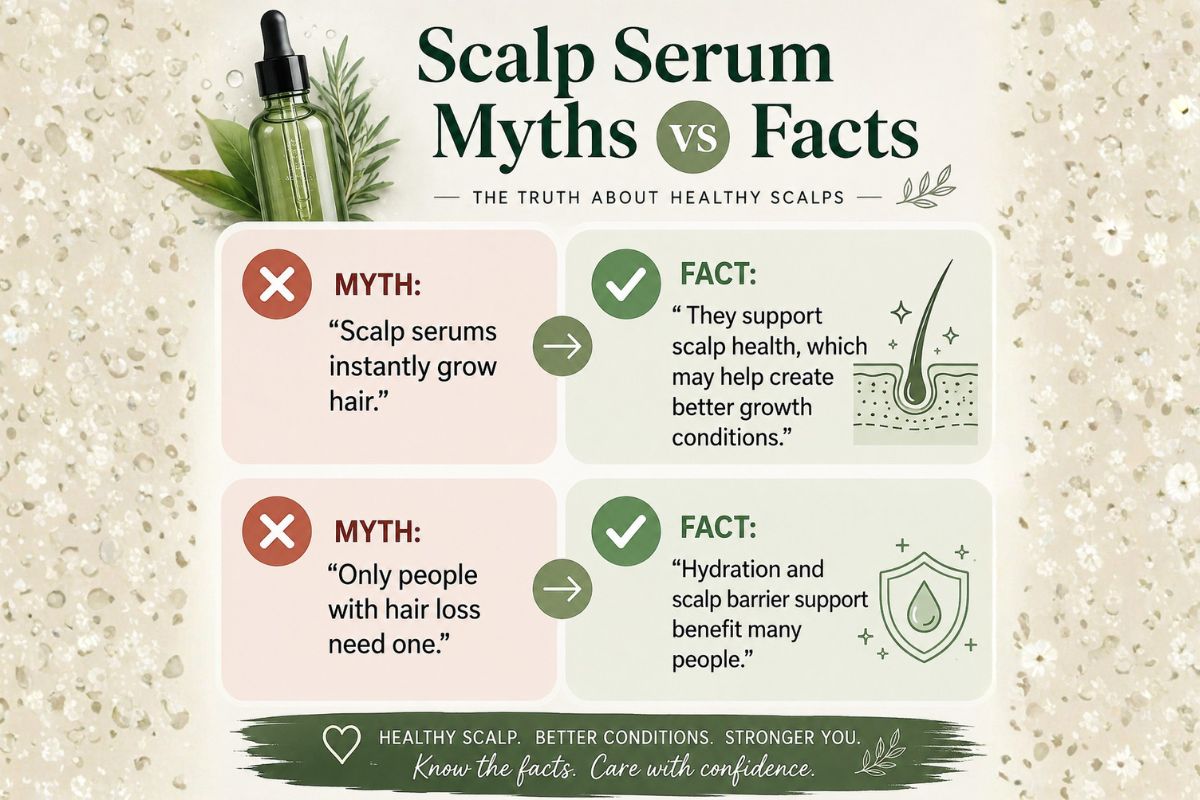
Myth: Scalp Serums Instantly Promote Hair Growth
Fact: Most scalp serums are designed to support scalp health, not create immediate hair growth.
Myth: More Product Means Better Results
Fact: Applying excess product rarely improves outcomes and may contribute to build-up.
Myth: Only People With Hair Loss Need One
Fact: Many people use scalp serums simply to maintain a healthy scalp and improve hydration.
Myth: Every Scalp Needs the Same Formula
Fact: Different concerns require different ingredients. Dry scalp needs differ from oily scalp needs.
Myth: Shampoo Alone Is Enough
Fact: A good shampoo and conditioner routine remains essential, but leave-in treatments can provide targeted support for specific scalp issues.
When Results Are Realistic
One reason consumers become disappointed with scalp products is unrealistic expectations. Most dermatologists recommend evaluating a scalp serum for at least several weeks before deciding whether it's working.
What You May Notice First
Within Days
- Improved comfort
- Reduced tightness
- Better hydration
Within Weeks
- Reduced scalp itchiness
- A more nourished scalp
- Less visible dryness
Within Months
- Stronger-looking hair
- Improved appearance of fullness
- Reduced hair shedding associated with scalp stress
A scalp serum helps support conditions that promote healthy hair, but it is not a guaranteed solution for genetic hair loss.
Why Scalp Care Is Becoming the New Skincare
Here's my prediction: scalp-first beauty is not a passing trend.
Consumers have become far more ingredient savvy, and they're increasingly applying skincare logic to their entire beauty routine. Just as we learned that healthy skin requires barrier support and hydration, we're now recognising that scalp and hair health are deeply connected.
The most exciting innovation isn't necessarily a miracle growth claim. It's the growing number of sophisticated formulas designed to improve scalp health in a practical, evidence-informed way.
In the coming years, I expect scalp diagnostics, customised treatments, and overnight formulas such as Scalp Solutions Overnight Scalp Renewal products to become increasingly mainstream.
Frequently Asked Questions
Do scalp serums really work?
Yes, many scalp serums can help improve scalp hydration, comfort, and barrier support. Results depend on the formula, consistency of use, and the individual's scalp concerns.
Should I apply scalp serum to wet or dry hair?
Most formulas can be used on wet or dry hair, although manufacturers may specify the preferred method. Always follow product directions.
Can a scalp serum promote hair growth?
A scalp serum may help create a healthier environment for hair growth by supporting the scalp, but cosmetic products are generally not proven treatments for genetic hair loss.
How often should I use a scalp serum?
Most brands recommend daily or several-times-weekly use. Use the product as directed and adjust according to your scalp's needs.
Can I use scalp serum with shampoo and conditioner?
Absolutely. Scalp serums work best as part of a complete scalp care routine that includes a suitable shampoo, conditioner, and targeted treatments where appropriate.
Are scalp serums suitable for all hair types?
Many are formulated for a wide range of hair types, though ingredient selection should reflect specific concerns such as dryness, oiliness, sensitivity, or thinning.
Saveable Guide: How to Choose the Right Scalp Serum
Choose niacinamide if:
→ You have an oily scalp or mild irritation.
Choose peptides if:
→ You are focused on hair density, fuller hair appearance, or thinning concerns.
Choose hydration-focused formulas if:
→ You struggle with dry scalp, tightness, or seasonal dryness.
Choose lightweight non-greasy formulas if:
→ You have fine hair or dislike heavy product textures.
Final Take
Scalp health is rapidly becoming as important as skincare within holistic beauty routines. While scalp serums aren't miracle products, the right formula can help soothe irritation, improve hydration, support the scalp barrier, and create a healthier environment for hair growth.
If you're already investing in quality hair care but still dealing with dryness, itchiness, oil imbalance, or concerns about thinning, a thoughtfully chosen scalp serum may be the missing step. Because ultimately, healthy hair doesn't begin with the strands you see. It starts with the scalp beneath them.