

In a dating culture filled with endless swipes, mixed signals and emotional burnout, one quality has quietly become more valuable than almost anything else: emotional safety. While physical attraction may spark initial interest, emotional safety is often what determines whether a connection grows into something meaningful and lasting.
Today, more people are looking beyond chemistry and seeking a relationship that feels supportive, respectful and secure. They want a partner who makes them feel seen, heard and valued. They want openness, trust and healthy communication. In other words, they want emotional safety.
Relationship psychology increasingly points to one truth: emotional safety is the foundation of healthy relationships. Without it, intimacy struggles to grow. With it, couples are far more likely to navigate challenges, deepen connection and build trust over time.
Why Emotional Safety Matters More Than Ever
Why are people prioritising emotional safety in dating today?
Modern dating has changed dramatically. Dating apps create more opportunities to connect, but they can also increase uncertainty, emotional fatigue and fear of rejection. As a result, many people are becoming more intentional about what they need from a relationship.
Research in relationship psychology suggests that emotional security plays a significant role in long-term relationship satisfaction. Studies on attachment theory have shown that people tend to thrive when they feel secure in their connections and confident that their partner will respond with empathy rather than judgment.
This shift is also reflected in conversations around mental health, self-awareness and therapy. More people now recognise that love alone is not enough. They need to feel safe enough to express thoughts and feelings openly without fear of criticism, manipulation or emotional withdrawal. As researcher Brené Brown has often highlighted, vulnerability is essential for connection. Yet vulnerability can only flourish when people feel emotionally protected. The reality is simple: emotional safety in a relationship creates the conditions where honesty, intimacy and mutual respect can grow.
Data Signal: Research consistently finds that trust, responsive communication and emotional support are among the strongest predictors of long-term relationship satisfaction.
What Emotional Safety Means

Emotional safety refers to the experience of feeling accepted, respected and emotionally secure with another person. It means feeling safe enough to be open and vulnerable without expecting ridicule, punishment or rejection.
When emotional safety exists, both people can express concerns, share needs and communicate honestly even when they may disagree.
Importantly, emotional safety does not mean avoiding conflict. Healthy relationships experience disagreements. The difference is that emotionally safe couples address issues from a place of compassion and understanding rather than blame and defensiveness.
A key here is to realize that people's motivations are subconscious and often connected to their own baggage they bring into a relationship. When we stop judging and making up stories of why our partner behaves a certain way, we begin to look deeper and learn about the motivation behind their behaviour.
This shift often opens the door to greater empathy and understanding.
Respectful Communication
Respectful communication forms the backbone of emotional trust.
It's crucial to remember that communication involves not only the words we say but also the way we send those messages. Say but also the way we send a message can completely change how it is received.
Your vocal tone, facial expressions, eye shape and posture all influence whether a conversation feels safe or unsafe. Whether you realize it or not, tightly pressed lips, crossed arms or dismissive short words can sometimes communicate frustration even when no direct criticism is intended.
Emotionally safe communication typically involves:
- Speaking honestly without attacking
- Maintaining a calm vocal tone
- Offering clarification rather than assumptions
- Showing curiosity rather than judgment
- Choosing respect during disagreements
When a partner feels respected, they are more likely to remain engaged in difficult conversations rather than entering defense mode.
Boundaries and Trust
Building trust requires healthy boundaries.
Many people think of boundaries as walls, but a healthier perspective is to think of boundaries as guidelines that protect both people emotionally.
For example, communicating a limitation clearly might sound like:
"I need some time to process before discussing this further."
Or:
"I value this conversation, but I'm not available to continue it while we're both upset." When you set a boundary respectfully, you help create safety and security rather than distance.
Trust also grows when people practice transparency. Small actions like following through on commitments, being honest about intentions and communicating expectations clearly help a relationship feel secure over time.
Partners who intentionally respect each other's boundaries often experience a stronger sense of mutual trust and intimacy.
Active Listening
One of the most overlooked relationship skills is listening.
The ability to actively listen means that whenever fears or issues arise, both people feel heard before solutions are introduced.
Listening is when you set aside distraction, truly take in what your partner is telling you and become curious to learn more.
Consider asking questions such as:
- "Can you help me understand how you're feeling?"
- "What would support look like right now?"
- "Did I understand that correctly?"
Active listening means resisting the urge to prepare your response while someone else is speaking.
It also means remembering that you may disagree without becoming dismissive.
This approach often prevents a small problem growing or your partner becoming resentful because concerns are addressed before they escalate.
Signs of Emotional Safety
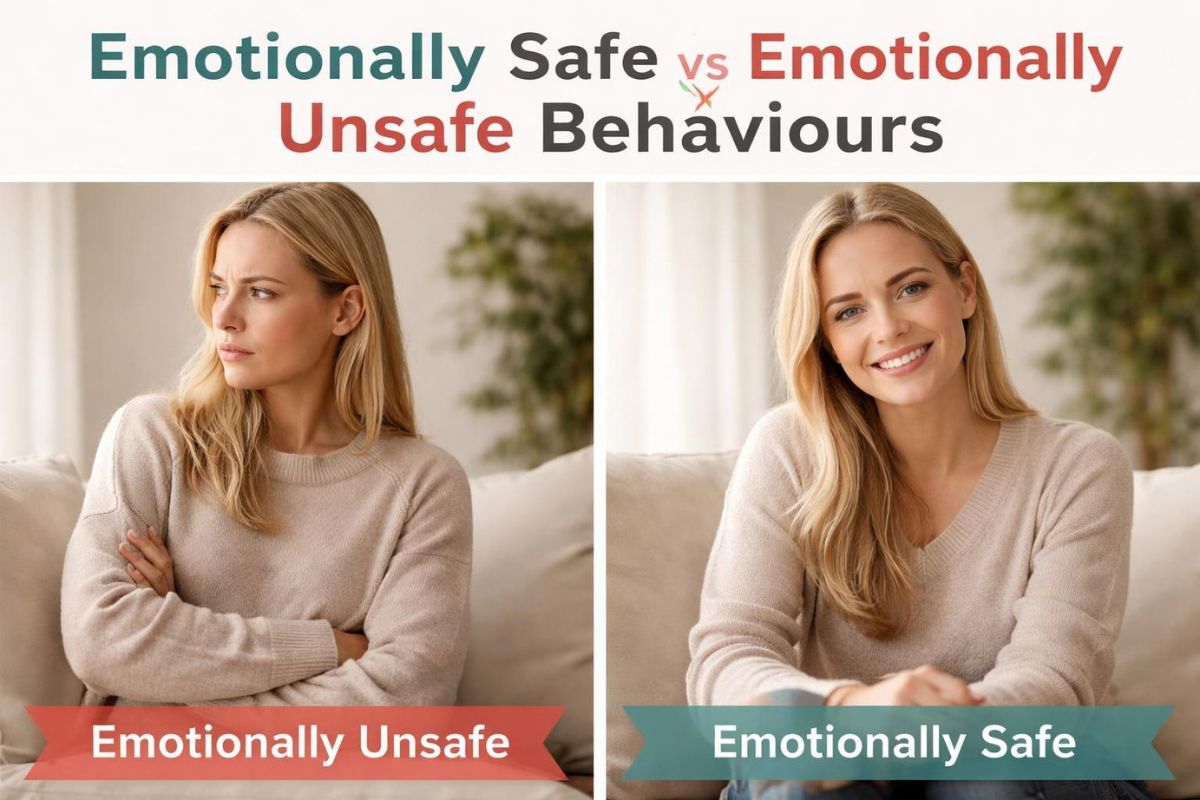
How do you know if a relationship is emotionally safe?
Emotional safety can sometimes be difficult to assess, especially during the early stages of dating. However, there are several common signs.
You Feel Seen and Accepted
You don't feel pressure to hide important parts of your personality. Your thoughts and feelings are welcomed even when they differ from your partner's.
Conflict Doesn't Feel Threatening
Disagreements happen, but they don't automatically lead to emotional withdrawal, humiliation or punishment.
There Is Consistent Empathy
Both people attempt to understand each other's perspective rather than immediately focusing on being right.
Boundaries Are Respected
A healthy boundary is viewed as useful information, not personal rejection.
Vulnerability Feels Possible
You feel safe enough to discuss fears, insecurities and future hopes without excessive fear of judgment.
Trust Develops Naturally
Rather than constantly questioning intentions, you gradually give your partner the benefit of the doubt because their actions consistently match their words.
Building It Gradually

Can emotional safety be built over time?
Absolutely. Contrary to popular belief, emotional safety is rarely instantaneous. Most couples cultivate it through repeated experiences of honesty, reliability and empathy. Here are practical ways to create emotional safety:
Practice Transparency
Share your intentions clearly. Openness about your thoughts and expectations reduces confusion and encourages trust.
Let Your Partner Know Your Preferences
Communicate your needs openly and invite your partner to share theirs. This creates a stronger sense of mutual understanding.
Respond Rather Than React
Before reacting defensively, pause and assess what is actually being communicated.
Stay Curious
When conflict occurs, begin to look for understanding rather than evidence that someone is wrong. Learn about the motivations behind behaviours. Remember that motivations are subconscious and often connected to past experiences, attachment patterns and emotional baggage.
Accept Imperfection
No relationship is emotionally safe all the time. Safety is not perfection. It is the ongoing practice of repair, accountability and compassion.
Take Small Steps
Building trust and intimacy requires consistency. Small moments of honesty often matter more than grand romantic gestures.
How to Create Emotional Safety in a Relationship
- Listen without interrupting
- Use respectful communication during conflict
- Practice transparency
- Communicate needs clearly
- Set a boundary respectfully
- Respect your partner's boundaries
- Give the benefit of the doubt when appropriate
- Focus on empathy over judgment
- Stay curious about your partner's perspective
- Address issues early before resentment develops
- Create space for open and vulnerable conversations
- Prioritise emotional connection alongside romantic attraction
Expert Perspective
Many relationship researchers and therapists agree that lasting intimacy depends on trust, responsiveness and emotional connection rather than chemistry alone.
Attachment research suggests that secure relationships develop when people consistently experience reliability, empathy and support from important partners. These experiences help individuals feel emotionally secure, allowing deeper openness and vulnerability.
While social media often focuses on dating rules and compatibility tests, evidence-based relationship psychology points toward a simpler truth: people thrive when they feel emotionally safe.
Frequently Asked Questions
What is emotional safety in a relationship?
Emotional safety is the feeling that you can express yourself honestly without fear of ridicule, rejection or emotional punishment. It allows both partners to communicate openly and authentically.
Why is emotional safety important?
Emotional safety supports trust, intimacy, communication and long-term relationship satisfaction. Without it, vulnerability and connection become much more difficult.
Can emotional safety be rebuilt after trust is damaged?
Yes. Rebuilding emotional safety often requires accountability, honest communication, consistency and patience. In some situations, working with a qualified therapist may help facilitate the process.
What are common signs of emotional safety?
Feeling heard, respected and accepted, having boundaries honoured, experiencing empathy during conflict and feeling comfortable expressing thoughts and feelings are all common indicators.
Is emotional safety the same as avoiding conflict?
No. Emotionally safe relationships still experience conflict. The difference lies in how disagreements are handled, with respect, empathy and a willingness to understand each other.
Final Take
Real talk: the most attractive quality in modern dating may no longer be confidence, charm or even compatibility. It may be emotional safety.
In a world where many people don't want more uncertainty, they want connection that feels steady, supportive and real. They want a partner who listens actively, respects boundaries, communicates honestly and responds with compassion rather than judgment.
Emotional safety is increasingly becoming a core requirement for healthy, lasting relationships. It creates the conditions for trust, intimacy and genuine connection to thrive. And while it isn't built overnight, every respectful conversation, every moment of empathy and every act of transparency helps strengthen it.
Because at the end of the day, the strongest relationships are not the ones where people never struggle. They are the ones where both people feel safe enough to grow together.