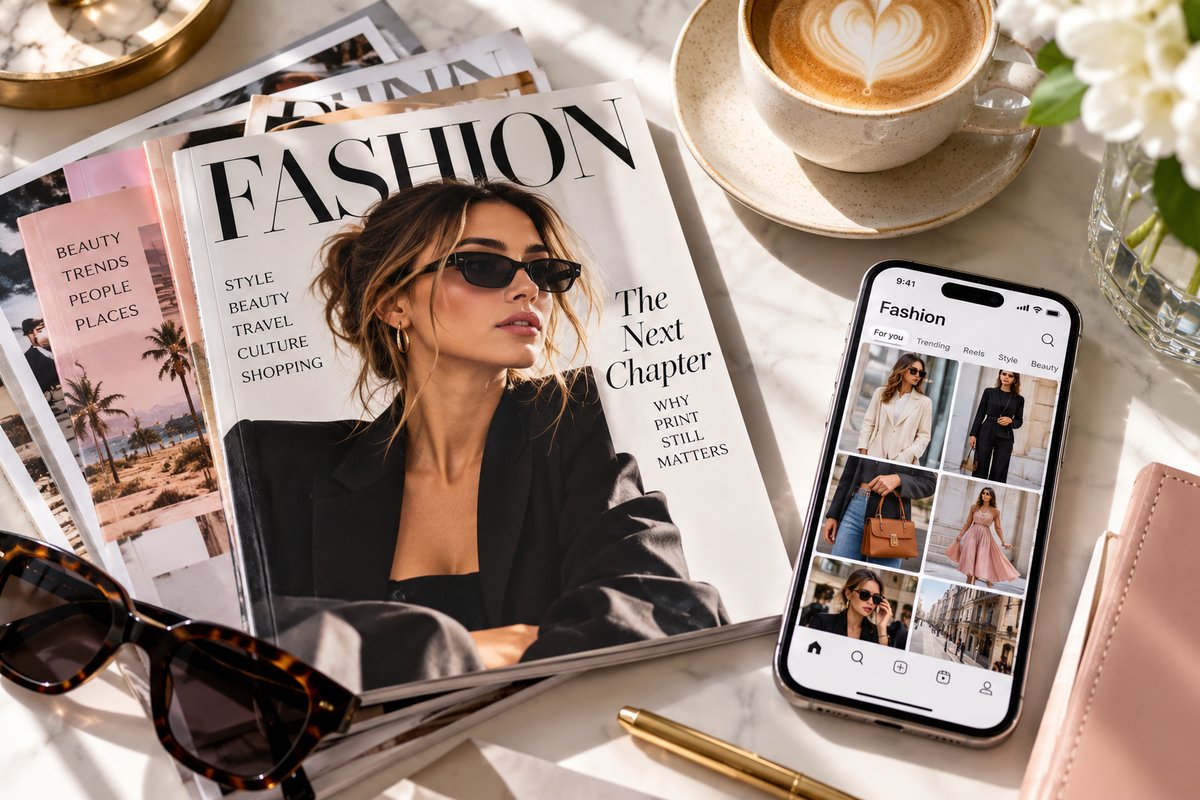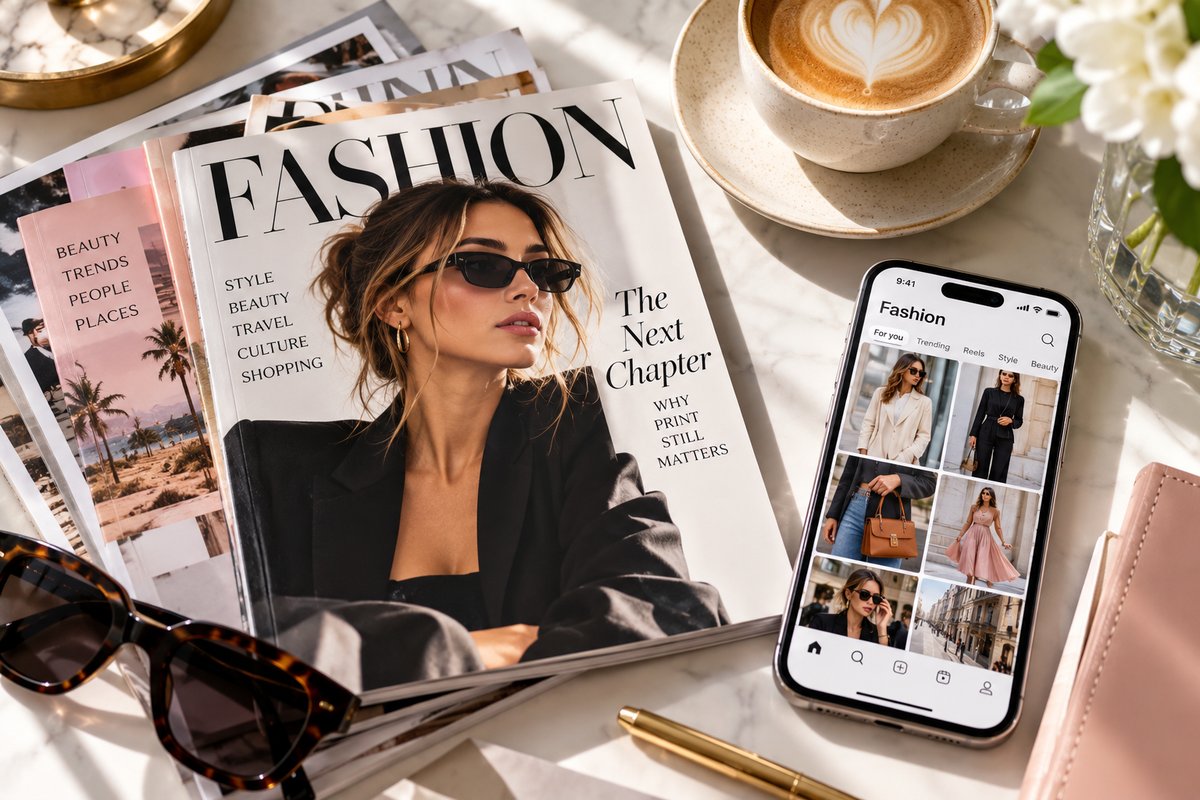
Fashion moves at the speed of a scroll, but REVOLVE's new magazine suggests print still offers something a feed cannot: space to slow down, look closely and stay with a story.
For years, the future of fashion media has appeared almost entirely digital.
Runway images arrive on our phones within seconds. Trends are named, shared and replaced before a monthly magazine could reach the newsstand. Shopping links sit beside creator videos, and every outfit can become content before it has even left the dressing room.
Against that backdrop, launching a new print magazine in 2026 feels surprising.
That is exactly what online fashion retailer REVOLVE has done.
The company has introduced REVOLVE Magazine, an annual print and digital publication with three debut covers featuring Kendall Jenner, Teyana Taylor and Alex Consani.
It is not a rejection of digital fashion. The publication is designed to be shoppable and extends across print and digital formats. Instead, it raises a more interesting question: after two decades of feeds, platforms and instant content, are fashion audiences beginning to value print differently?
Fashion discovery has become incredibly fast
Digital media has made fashion more immediate and more accessible.
A reader in Brisbane can watch a Paris runway show, discover a small label in Copenhagen and compare pieces from several retailers without leaving the sofa.
Social media has also widened the range of people influencing fashion. Editors and designers still matter, but so do stylists, creators, customers and niche communities building their own visual worlds.
That speed creates excitement, yet it can also flatten the experience.
Images are viewed for seconds. Stories compete with notifications. A beautifully styled feature can appear between an advertisement, a message and a video chosen by an algorithm.
The next idea is always waiting underneath the current one.
Print changes the pace
A printed magazine asks for a different kind of attention.
There is no infinite scroll and no automatic refresh. The sequence has been deliberately chosen, from the cover and opening pages to the final feature.
Photography can stretch across a spread rather than being compressed into a phone screen. Typography, paper, colour and scale become part of the story.
That physical experience is difficult to reproduce online.
Print also has a beginning and an end. In a media environment where content never stops, a finite object can feel unusually calm.
This does not mean readers want to abandon digital platforms. It suggests the two formats may serve different needs.
Digital is excellent for immediacy, search, conversation and convenience. Print can offer focus, permanence and a more considered visual experience.
Why would a digital retailer launch a magazine?
REVOLVE built its influence through ecommerce, creators, events and social media rather than a traditional publishing business.
Its move into print is therefore less about returning to an old model and more about expanding the world around the brand.
According to the company's launch announcement, the magazine brings together fashion, beauty, culture, travel and commerce through talent stories, expert style and product curation.
That mix turns a catalogue into something closer to an editorial object.
It gives the retailer room to explain its taste, document its cultural relationships and present products within a broader story rather than as isolated thumbnails.
For a brand, print can also create a sense of occasion. A magazine placed on a coffee table, kept on a shelf or photographed by its owner has a lifespan that can extend well beyond a campaign post.
The return of the keepsake
Not every magazine is automatically collectible, but fashion publishing has always understood the appeal of the object.
A memorable cover can represent a moment in culture. A strong editorial can become a reference for photographers, designers and stylists years after the clothes themselves have moved out of stores.
REVOLVE has leaned into that idea by launching with three separate covers.
Kendall Jenner, Teyana Taylor and Alex Consani each bring a different relationship to fashion and contemporary culture. Multiple covers encourage choice and, intentionally or otherwise, the instinct to collect.
In a digital feed, the image disappears into an archive. In print, the cover remains visible every time the magazine is picked up.
Can branded publishing still feel editorial?
The most important question is not whether a retailer can print a magazine. It is whether readers will find it genuinely worth reading.
Branded publications sit in a complicated space.
They can fund ambitious photography and offer access to talent, but their commercial purpose must remain clear. Product curation and shoppable features are part of the REVOLVE model, not incidental additions.
Readers are generally comfortable with that relationship when it is transparent and the content gives them something beyond a sales pitch.
The strongest brand magazines have a recognisable point of view. They tell stories that make sense within the brand's world while still respecting the reader's intelligence.
If every page feels like an advertisement, the tactile format alone will not make it meaningful.
Print and digital no longer need to compete
The old question was whether websites would replace magazines.
The more useful question now is how each format can do what it does best.
A print story can create depth and visual impact. Its digital version can add video, links, updates and direct access to products. Social content can introduce the feature to people who would never encounter the physical edition.
Used together, the formats can reinforce one another.
REVOLVE describes its magazine as seamlessly shoppable, which makes that relationship explicit. Inspiration can begin on paper and continue online when a reader wants details, availability or a closer look.
Fashion Weekly Tip: Use magazines as a slower form of style research. Mark the silhouettes, colours and styling ideas that still appeal after several weeks. Those lasting references are often more useful for building a wardrobe than the micro-trend that dominated your feed for one afternoon.
What print offers fashion now
Print is unlikely to regain its former role as the fastest way to learn what is happening in fashion.
It may not need to.
Its value now lies in being slower, more selective and more physical than the channels surrounding it.
That makes the launch of REVOLVE Magazine interesting beyond one retailer or three celebrity covers.
It reflects a broader desire for media that feels chosen rather than endlessly delivered.
Fashion audiences still want speed. We still want runway updates, shopping information, creator commentary and immediate inspiration.
But we may also want somewhere to pause.
The Fashion Weekly view
Print still matters because it changes the relationship between a fashion story and its reader.
It asks for time. It gives images room. It turns an edition into an object that can be revisited rather than another item cleared from a notification screen.
REVOLVE's approach also shows that print's next chapter is not necessarily nostalgic.
A magazine can be physical and shoppable, editorial and commercial, slow to experience and connected to an immediate digital journey.
The future of fashion media is unlikely to belong to one format.
It will belong to publications and brands that understand why a story should be a video, a web feature, a social post or something worth holding in your hands.