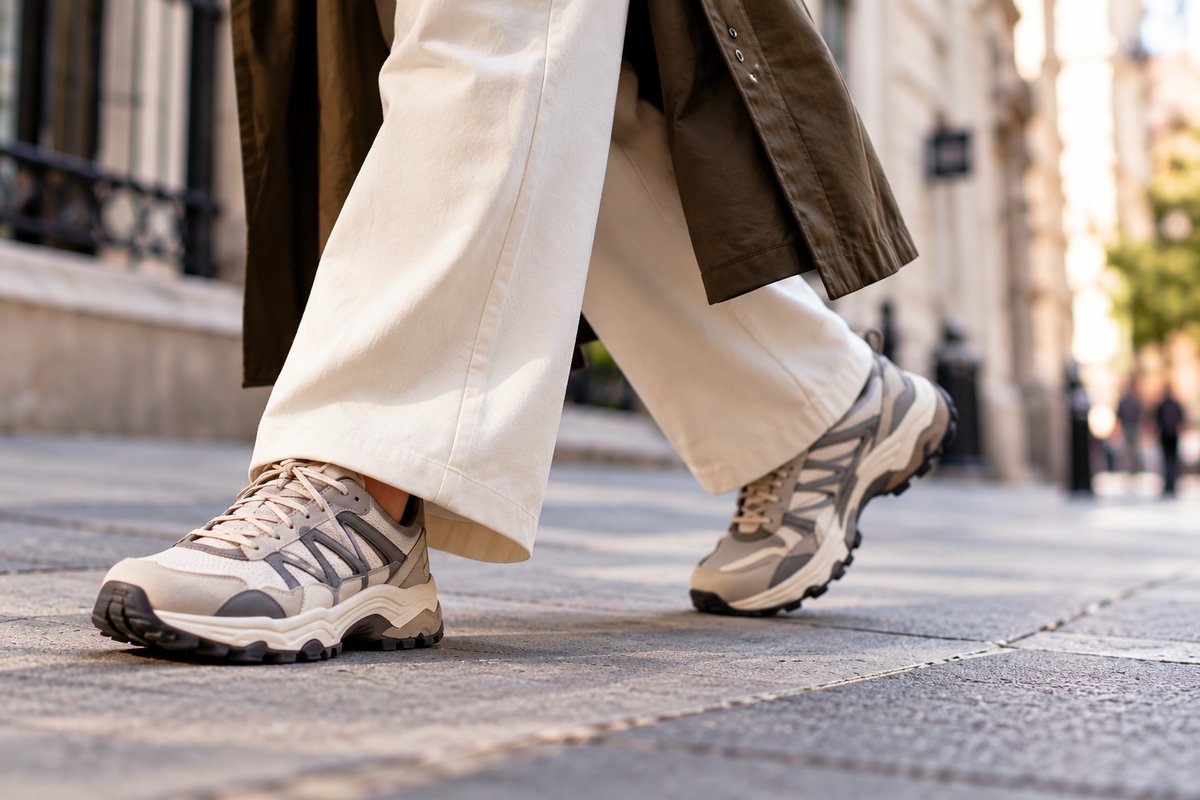
Trail shoes were once designed for muddy tracks, steep climbs and weekends outdoors. Now they are just as likely to be spotted with wide-leg trousers, oversized tailoring or a carefully curated street-style look. So when did technical footwear become fashion footwear?
Fashion has always had a habit of borrowing from clothing designed for practical purposes.
Workwear moved from factories to wardrobes. Military jackets became fashion staples. Sports shoes escaped the gym decades ago.
Now outdoor footwear is following the same path.
A new collaboration between FP Movement and Salomon provides the latest example, bringing Salomon's technical footwear together with the fashion-led activewear world of Free People's FP Movement.
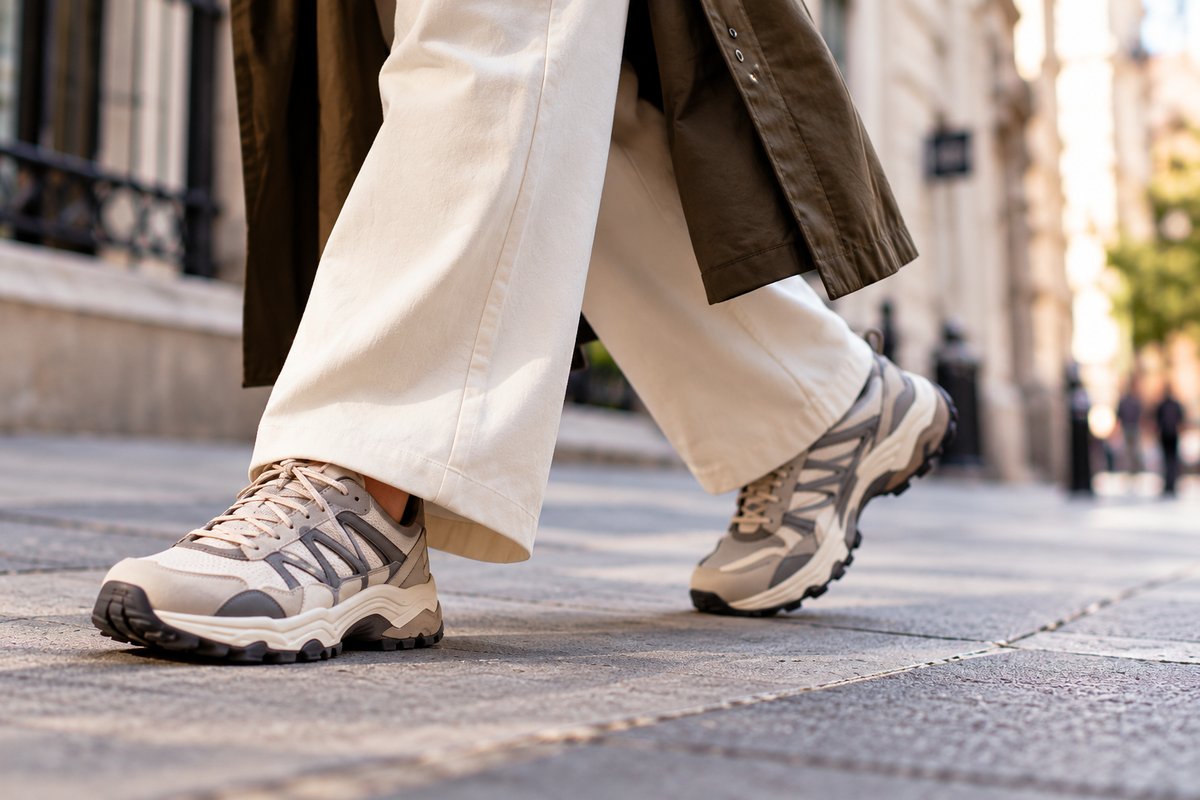
The collaboration includes interpretations of Salomon's XT-6 and XT-Whisper silhouettes.
But the bigger story is not one collaboration.
It is how shoes originally associated with trails and outdoor performance have become some of fashion's most desirable everyday footwear.
From the Trail to the Street
Not long ago, choosing a hiking or trail shoe was primarily a practical decision.
Grip mattered. Stability mattered. Durability mattered.
Whether the shoe worked with your outfit was considerably further down the list.
Today, technical footwear occupies a very different position.
Trail-inspired sneakers are being worn with denim, skirts, tailored trousers and dresses. Outdoor brands appear in fashion editorials and street-style photographs, while performance silhouettes increasingly sit alongside traditional sneakers in fashion retailers.
The shoes have not necessarily become less technical.
Fashion has simply decided that technical looks good.
Welcome to Gorpcore
The broader trend is often described as gorpcore.
The name comes from “good ol' raisins and peanuts” — the trail-mix acronym familiar to hikers — but the fashion movement goes well beyond hiking snacks.
Gorpcore takes practical outdoor pieces and incorporates them into everyday wardrobes.
Think technical jackets, fleeces, utility trousers, hiking shoes, backpacks and weather-resistant fabrics worn far from the nearest mountain.
At its best, the trend combines function with an intentionally relaxed aesthetic.
It also reflects a wider change in what consumers consider fashionable.
Fashion Has Become More Comfortable With Practicality
There was a time when fashionable footwear often involved a compromise.
The most stylish shoe was not necessarily the one you wanted to wear for an entire day.
Sneaker culture helped change that.
Once trainers became acceptable almost everywhere, consumers became accustomed to expecting comfort from everyday footwear.
Technical shoes take that expectation further.
Cushioning, grip, support and lightweight materials suddenly become attractive even if your most challenging terrain is the walk between the train station and the office.
Practicality has stopped being the enemy of fashion.
Increasingly, it is part of the appeal.
Why Salomon Became a Fashion Favourite
Salomon is an interesting example of this shift because the brand's identity is rooted firmly in outdoor performance.
Shoes such as the XT-6 were not originally conceived simply as fashion sneakers.
Their technical construction is part of what makes them visually distinctive.
That authenticity matters.
Fashion consumers are increasingly attracted to products that have a genuine purpose behind their design.
A technical shoe designed to perform on difficult terrain has details, materials and proportions that would be difficult to reproduce convincingly if they existed purely for decoration.
Ironically, the fact that the shoes were not originally designed for fashion may be part of what made fashion want them.
Collaborations Are Bringing Two Worlds Together
Partnerships such as FP Movement × Salomon make the crossover explicit.
FP Movement sits naturally between fashion, wellness and active lifestyles, while Salomon brings genuine outdoor-performance heritage.
The result speaks to a consumer who may move between those worlds rather than identifying exclusively with one of them.
She might wear technical sneakers on a morning walk, keep them on for coffee and pair them with an outfit that has very little to do with hiking.
That versatility is commercially powerful.
One pair of shoes can potentially occupy several different parts of a wardrobe.
It Is Not Only About Hiking
Technical footwear's fashion moment is part of a much larger blurring of categories.
Running shoes have become lifestyle shoes.
Football jerseys have become streetwear.
Yoga clothing became everyday clothing.
Workwear became premium fashion.
Consumers increasingly ignore the original category printed on the label and decide for themselves where a product belongs.
The same thing is happening with outdoor clothing.
You do not need to climb a mountain to appreciate a waterproof jacket.
And apparently, you no longer need a trail to wear trail shoes.
How Do You Wear Technical Shoes Without Looking Like You Are Going Hiking?
The easiest approach is contrast.
Instead of building an entire outdoor outfit around the shoe, pair technical footwear with pieces from a different part of your wardrobe.
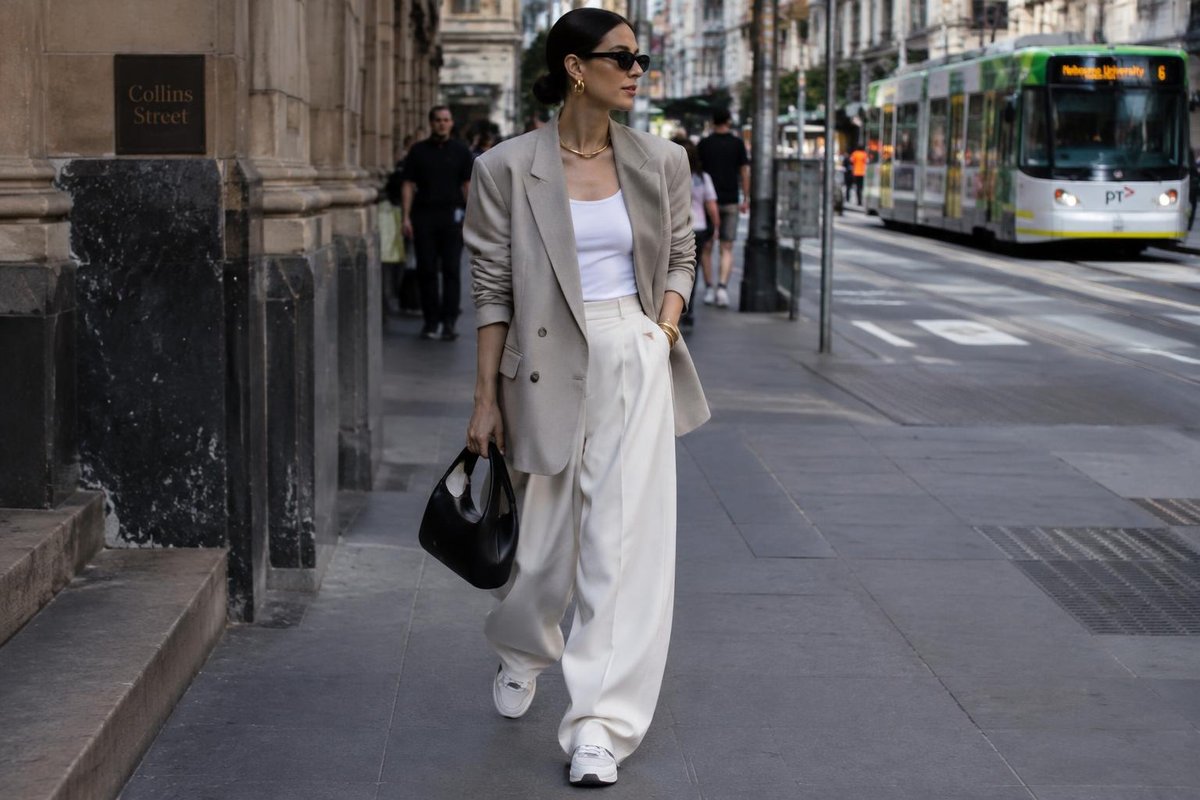
Wide-leg trousers and a simple shirt can make a rugged sneaker feel intentional.
A feminine skirt or dress creates an even stronger contrast.
Relaxed denim works naturally, particularly with a more streamlined trail silhouette.
For an understated look, allow the shoe to be the technical element rather than adding a matching performance jacket, utility trousers and hiking backpack at the same time.
Unless, of course, full gorpcore is exactly what you are going for.
Are Technical Shoes Worth Buying If You Never Hit the Trail?
That depends on why you are buying them.
If the attraction is purely a short-lived trend, it is worth considering whether the shoe genuinely fits your personal style.
Fashion's enthusiasm can move quickly.
But if you value comfort, durability and practical design, technical footwear can make sense long after a particular silhouette disappears from street-style photographs.
That may be one reason this trend has had staying power.
There is something useful underneath the aesthetic.
Outdoor Fashion Reflects a Bigger Lifestyle Shift
The rise of technical footwear also fits with the continuing intersection between fashion and wellness.
Walking, hiking, running and outdoor activities have become increasingly visible parts of lifestyle culture.
Clothing designed for movement therefore occupies more space in everyday wardrobes.
At the same time, fashion has become less rigid about where particular clothes are supposed to be worn.
The boundaries between activewear, streetwear, outdoor clothing and traditional fashion are becoming increasingly difficult to define.
The Trail Shoe Is Not Going Back to the Trail
Fashion trends inevitably evolve.
The exact technical sneaker everyone wants today will eventually be replaced by another silhouette.
But the broader shift is unlikely to disappear.
Consumers have discovered that practical footwear can also be interesting footwear.
Brands have discovered that performance products can reach audiences far beyond their original sporting communities.
And fashion has rediscovered one of its favourite tricks: taking something designed for one world and giving it an entirely new context.
So the next time you see a pair of serious-looking trail shoes under tailored trousers, there is no need to wonder whether their owner has become lost on the way to a mountain.
They may simply be very much on trend.