

In a world where a smartphone is never more than an arm's length away, many couples are asking the same question: are we spending time together, or are we simply sharing the same space while staring at different screens? This article explores how modern couples are creating healthier digital boundaries, strengthening connection, and building a more intentional relationship with technology.
Why This Matters Right Now
Technology has transformed how we work, communicate, and maintain important relationships. From messaging apps and social media platforms to online games and endless notifications, the digital world offers incredible convenience. Yet for many couples, constant connectivity can quietly become a source of distraction.
The challenge is not technology itself. The real issue is how technology use affects attention, intimacy, and emotional availability.
Behavioural researchers have consistently found that frequent digital interruptions can reduce relationship satisfaction, increase feelings of disconnection, and hinder meaningful conversation. Even a quick glance at a smartphone during a discussion can send an unintended message that something else is more important.
Today's healthiest couples are not necessarily going without technology. Instead, they are learning how to manage it intentionally and establish healthy boundaries that support both their relationship and their individual well-being.
The Impact of Constant Connectivity

Modern relationships exist in a unique environment. Partners are often connected to work, social media accounts, group chats, and online experiences around the clock.
While this accessibility offers benefits, it can also create challenges.
Common Technology-Related Relationship Struggles
- Much screen time replacing quality conversations
- Notifications interrupting important moments
- Social media comparisons affecting self-esteem
- Difficulty separating work and personal life
- Reduced emotional presence during time together
- Technology overuse impacting sleep and bedtime routines
Many couples notice that the issue isn't a single app or platform. Instead, small digital habits accumulate over time.
Relationship experts often describe this as "micro-disconnection", where frequent interruptions gradually reduce opportunities for deeper connection. Over weeks and months, partners may feel less understood even though they communicate constantly through text messages and messaging apps.
A Real-Life Example
Australian couple Emma and Ryan realised they were spending nearly every evening sitting together while scrolling independently.
"We were technically together every night," Emma explained, "but we weren't actually connecting."
After openly discussing their concerns, they decided to set limits around evening device usage. Within several weeks, they reported feeling more engaged, laughing more often, and having deeper conversations.
Their experience highlights an important insight: relationship challenges around technology are often less about conflict and more about attention.
Setting Healthy Digital Boundaries
Creating clear digital boundaries does not mean becoming anti-technology. It means making intentional decisions about when, where, and how technology fits into your relationship.
Healthy boundaries are essential because they create predictability, mutual respect, and shared expectations.
Start With Open Communication
One of the most effective strategies is surprisingly simple: talk to your partner.
Rather than assuming you're on the same page, openly discuss:
- How technology affects your connection
- What feels supportive versus frustrating
- Where distractions most commonly occur
- Which habits help you feel comfortable and valued
Setting healthy boundaries works best when both people collaborate on solutions rather than criticise each other's behaviour.
Questions worth exploring together include:
- Do we spend enough distraction-free time together?
- What technology habits strengthen our bond?
- Which habits create distance?
- Are work messages affecting our personal time?
- How can we navigate the digital world more intentionally?
Identify Technology Trigger Points
Every couple is different.
For some, the biggest challenge may be social media platforms. For others, work emails, online games, or constant notifications are the main issue.
The goal is to differentiate between healthy technology use and behaviours that interfere with connection.
Common trigger areas include:
- During meals
- Before bedtime
- Date nights
- Holidays and weekends
- Family gatherings
- Conversations about important topics
Once identified, couples can establish healthy boundaries tailored to their specific circumstances.
Create Clear Agreements
Successful digital boundaries are specific rather than vague.
Instead of saying:
"We should use our phones less."
Try:
"Let's designate the dining room as a phone-free space."
Or:
"Let's block work notifications after 8pm unless there's an emergency."
Clear boundaries are easier to maintain because both partners understand expectations.
Creating Device-Free Rituals
One of the most powerful ways to strengthen an intimate relationship is by creating regular moments of uninterrupted connection.
These rituals do not need to be elaborate.
Consistency matters more than complexity.
Meal-Time Boundaries
For many couples, meal times offer a natural opportunity to reconnect.
Unfortunately, the dining room has become one of the most common places for digital distraction.
By creating meal-time boundaries, couples can transform a routine activity into meaningful relationship time.
Consider:
- Keeping smartphones out of sight
- Turning off notifications
- Avoiding social media scrolling during meals
- Using dinner as a daily check-in
Research in behavioural psychology suggests that uninterrupted face-to-face conversation can enhance emotional connection and improve relationship satisfaction.
Saveable Relationship Tip
The Dinner Rule
Choose one meal each day where all devices stay off the table.
Use the time to discuss:
- The best part of your day
- A current challenge
- Something you're looking forward to
Small conversations often lead to stronger emotional intimacy.
Phone-Free Evenings

Evenings are often when couples have the greatest opportunity to connect.
However, they're also prime hours for streaming services, social media accounts, browser history rabbit holes, and endless scrolling.
A phone-free evening does not have to mean abandoning technology completely.
Instead, couples can set clear boundaries around individual device usage.
Examples include:
- No smartphones after a certain hour
- Shared activities before screen time
- Reading together
- Taking an evening walk
- Playing board games
- Watching one programme intentionally rather than scrolling endlessly
The Bedtime Boundary
Sleep researchers continue to highlight the impact of screens on rest and recovery.
Creating a technology-free bedtime routine can support both well-being and relationship health.
Many couples report improved connection when they:
- Charge devices outside the bedroom
- Avoid checking messages before sleep
- Replace scrolling with conversation
- Spend a few minutes connecting before lights out
These small changes can foster emotional closeness while supporting healthier sleep habits.
Building Trust Without Becoming Invasive
Technology often introduces new questions around privacy, trust, and transparency.
Topics such as sharing passwords, checking browser history, reviewing text messages, and monitoring social media accounts can become sources of tension.
The healthiest approach balances openness with respect for individual boundaries.
Trust is not built through surveillance.
It is built through honesty, consistency, and open communication.
Couples should feel comfortable discussing expectations while recognising that transparency and privacy can coexist.
Healthy digital boundaries support trust because both partners understand what feels respectful and what feels invasive.
How Today's Couples Are Navigating the Digital World Together
An encouraging trend emerging among younger and long-term couples alike is a shift toward intentional technology use.
Rather than viewing technology as the enemy, many are learning to:
- Set healthy expectations
- Reinforce positive digital habits
- Set clear communication agreements
- Use technology to enhance connection rather than replace it
- Balance online and offline experiences
- Take steps to protect their well-being
Some couples schedule app-free date nights.
Others set limits on screen time.
Many create shared goals around productivity, family life, and personal growth.
The strongest relationships recognise that a healthy relationship with technology is not about perfection. It is about awareness.
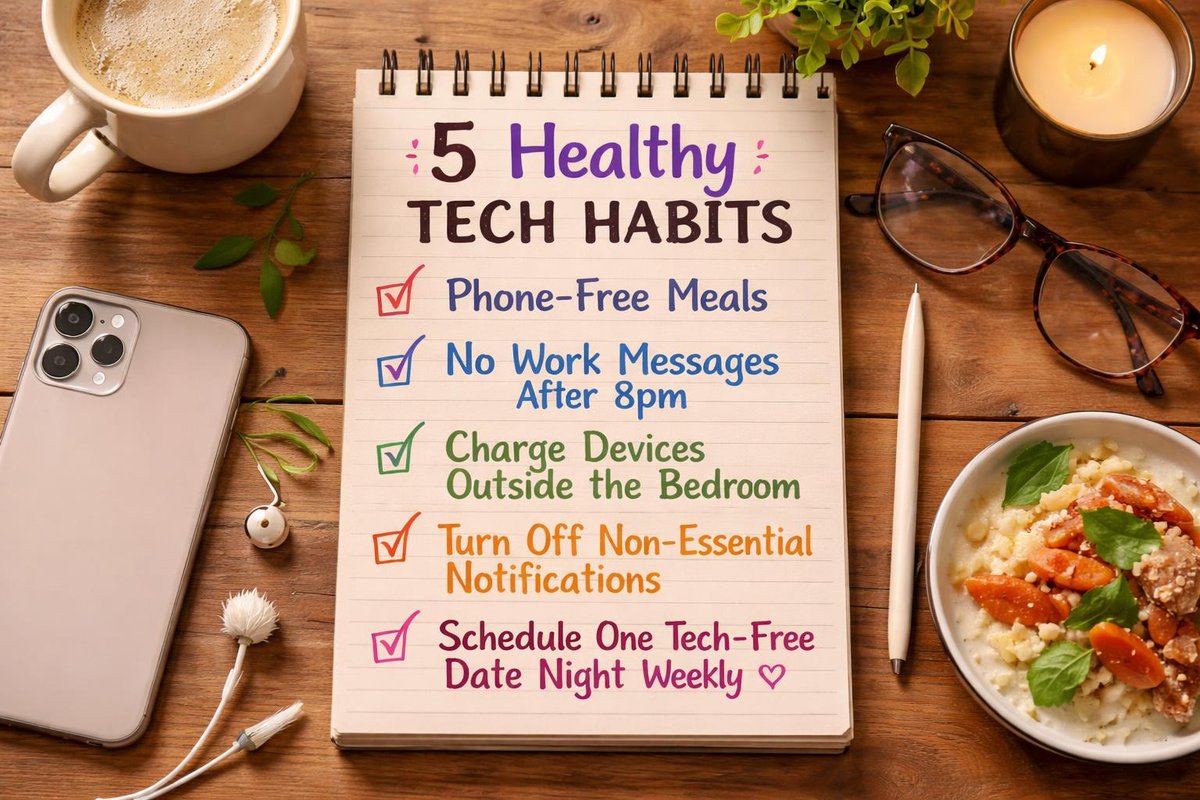
5 Ways to Establish Healthy Boundaries
1. Conduct a Technology Check-In
Openly discuss how digital habits affect your relationship.
2. Designate One Device-Free Space
Start with the dining room or bedroom.
3. Set Limits Around Evening Usage
Create boundaries that support connection before bedtime.
4. Disable Non-Essential Notifications
Reduce unnecessary interruption and distraction.
5. Schedule Weekly Connection Time
Protect time together just as you would any important commitment.
Frequently Asked Questions
What are digital boundaries in a relationship?
Digital boundaries are agreed expectations around technology use, including smartphone usage, social media behaviour, messaging habits, privacy, and screen time. They help couples maintain connection while navigating the digital world.
How do I talk to my partner about technology boundaries?
Start with open discussions rather than criticism. Focus on how certain habits make you feel and invite collaboration on solutions. Mutual respect is essential when setting healthy boundaries.
Is sharing passwords a sign of trust?
Not necessarily. Every couple is different. Some choose transparency through shared access, while others maintain privacy. Healthy relationships focus on honesty and communication rather than monitoring behaviour.
How much screen time is too much for couples?
There is no universal number. The key question is whether technology use supports or hinders connection, intimacy, communication, and overall well-being.
Can technology strengthen a relationship?
Absolutely. Using technology intentionally can help couples stay connected, organise life together, share experiences, and maintain communication. The goal is to create a healthier relationship with technology rather than eliminate it.
Final Take
Technology isn't going anywhere, and most couples wouldn't want it to. The challenge is learning how to use it in ways that support connection rather than compete with it.
The most connected couples are not necessarily those who spend the least time online. They're the ones who establish healthy boundaries, set clear expectations, and remain intentional about how technology fits into their lives.
A healthy relationship with technology is ultimately about making conscious choices. When couples create boundaries around technology, prioritise open communication, and protect meaningful time together, they strengthen trust, deepen intimacy, and build a healthier, more balanced relationship for the long term.
Because technology works best in relationships when clear boundaries support quality time, not replace it.