
Let’s be honest: if you asked your Nan what commitment looks like, she’d probably tell you it begins with a ring, a registry, and a very specific shade of satin bridesmaid dresses. But Australia in 2026? We’re rewriting the rules. More couples are choosing to live together before ever talking rings. Cohabitation isn’t a pit stop anymore—it’s a legitimate relationship path. And marriage? It’s no longer the default finish line, but one option among many.
We’re not less committed. We’re just more intentional.
This is the new emotional blueprint: evolving expectations, alternative relationship paths, and a long overdue conversation about what we actually want from love, partnership, and our life together.
What’s Happening: Australia’s New Commitment Culture
1. Cohabitation Has Gone Mainstream (and Honestly, It Makes Sense)
Once upon a time, cohabiting couples were whispered about like they were living some scandalous “marriage‑but‑not‑marriage” lifestyle. Today? It’s the norm. Many cohabiting partners, unmarried couples, and even those simply cohabitating informally feel they’re building something real—sometimes more real than a marital relationship rushed for the wrong reasons. For modern couples, cohabitation involves:
- Testing long-term compatibility
- Sharing finances and domestic roles
- Building relationship quality without pressure
- Living with a partner before making bigger decisions
And research supports what many of us feel intuitively: couples who choose to cohabit intentionally often have healthier communication habits because they’re not relying on a marriage certificate as emotional glue.
2. People Aren’t Rejecting Marriage — They’re Redefining It
Here’s the big twist: Australians aren’t anti‑marriage. They’re anti‑rushed, anti‑tradition‑for-the-sake-of-it, and very anti-divorce. Many couples delay marriage because:
- The cost of weddings is borderline ridiculous
- Career stability comes later than it used to
- They want to avoid repeating their parents’ breakup
- They want to be emotionally ready
- They’ve already built a life similar to marriage through cohabitation
This isn’t commitment avoidance—it’s commitment maturity.
3. The Definition of “Relationship Status” Is Evolving
In a world of soft launches, hard launches, and relationship status updates across Instagram stories, modern love is gloriously nuanced. We now have:
- Cohabiting relationships
- Long-term unmarried partners
- Civil partnerships
- Blended families
- Couples who stay together for a long time without ever planning to wed
All of these paths reflect the rise of relationships built on compatibility, not conformity.
Why It Matters: The Real Differences Between Marriage and Cohabitation
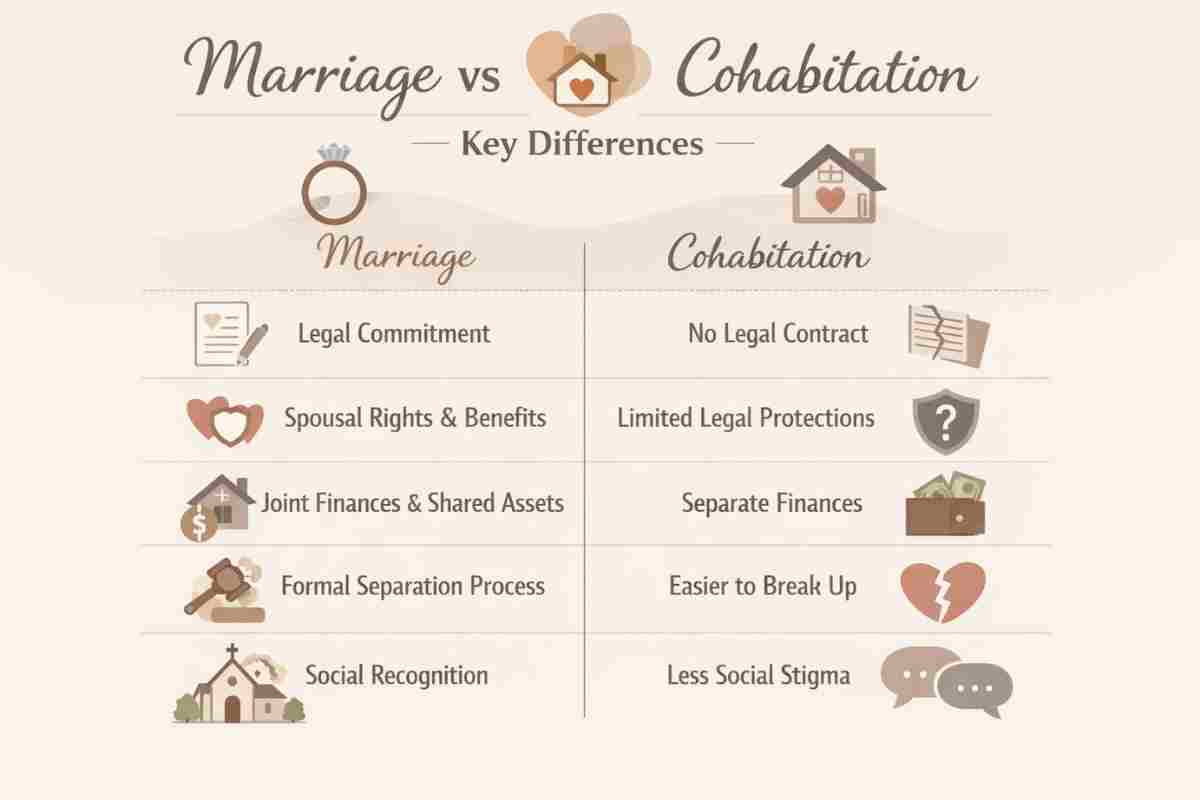
Let’s make something crystal clear: emotionally, the difference between marriage and cohabitation may feel small. But legally? It’s not small at all.
1. Marriage Comes With Built-In Legal Rights
When you’re legally married, you automatically get:
- The right to make medical decisions for your partner
- Asset protection and clear inheritance pathways
- Financial protections upon separation
- A legal obligation to support each other
- Recognised marital status under family law
Basically: marriage removes uncertainty.
2. Cohabitation Offers Freedom — But Fewer Guarantees
Couples choose to live together for many reasons, but here’s the real talk: unless you have a cohabitation agreement, you don’t automatically have:
- The same financial protections
- The right to inherit property
- Guaranteed support if the relationship ends
- Clear family law standing
Australia does not recognise “common law marriage” the way some U.S. states do. And this is where many cohabitors get blindsided—especially women and men who helped build a shared life emotionally and practically, but not legally.
3. Relationship Outcomes Aren’t Identical
Longitudinal research and previous studies show patterns worth noting:
- Married individuals tend to be less likely to report depressive symptoms
- Married people often receive more social support
- Married men and married women consistently show higher subjective well‑being
- Some cohabiting individuals experience more financial hardship upon separation
But these are trends—not your destiny.
Plenty of cohabiting relationships thrive. Plenty of marriages struggle.
Your relationship quality—not your paperwork—is what truly shapes your future.
What You Should Do: Choosing the Path That Fits Your Heart (and Your Life)

1. Get Clear on What Commitment Means to You
Forget society’s expectations. Ask yourself:
- Do I want the emotional symbolism of marriage?
- Do I want the legal benefits?
- Do I feel secure without a marriage certificate?
- Am I avoiding marriage—or am I just not ready?
Your honesty with yourself matters more than any ring.
2. Have the (Potentially Awkward) Legal Conversation
If you’re cohabiting long-term, talk about:
- Finances
- Property
- Children
- Inheritance
- Rights and obligations
A cohabitation agreement isn’t unromantic—it’s smart.
It protects both partners and ensures no one is left vulnerable upon separation.

3. Prioritise Relationship Quality Over Status Labels
You can be a married couple with terrible communication or unmarried partners with deep emotional safety. Focus on:
- Emotional availability
- Fair division of labour
- Mutual growth
- Support systems
- Shared goals
These shape relationship duration more than any ring.
4. Don’t Let Fear of Divorce Stop You
Some people want to avoid the pain they saw growing up. But avoiding the conversation completely just breeds uncertainty. You’re not your parents.
Your relationship is not their relationship.
You get to write your own story.
Quick Wisdom: When You’re Torn Between Marriage & Cohabitation
If you want emotional clarity:
→ Talk openly about commitment expectations If you want legal clarity:
→ Speak to a lawyer before making major decisions If you’ve been together for years:
→ Evaluate whether your current arrangement protects both partners If marriage feels important to you:
→ Don’t downplay it. Your desires are valid.

Conclusion
Modern love has layers. And that’s a beautiful thing.
Whether you choose marriage, cohabitation, civil partnership, or something you define yourself, the real power is in choosing intentionally—not automatically. Commitment isn’t a wedding.
Commitment is showing up, growing together, and making choices that honour your heart. Stay soft, stay strong—and never settle.
ienna