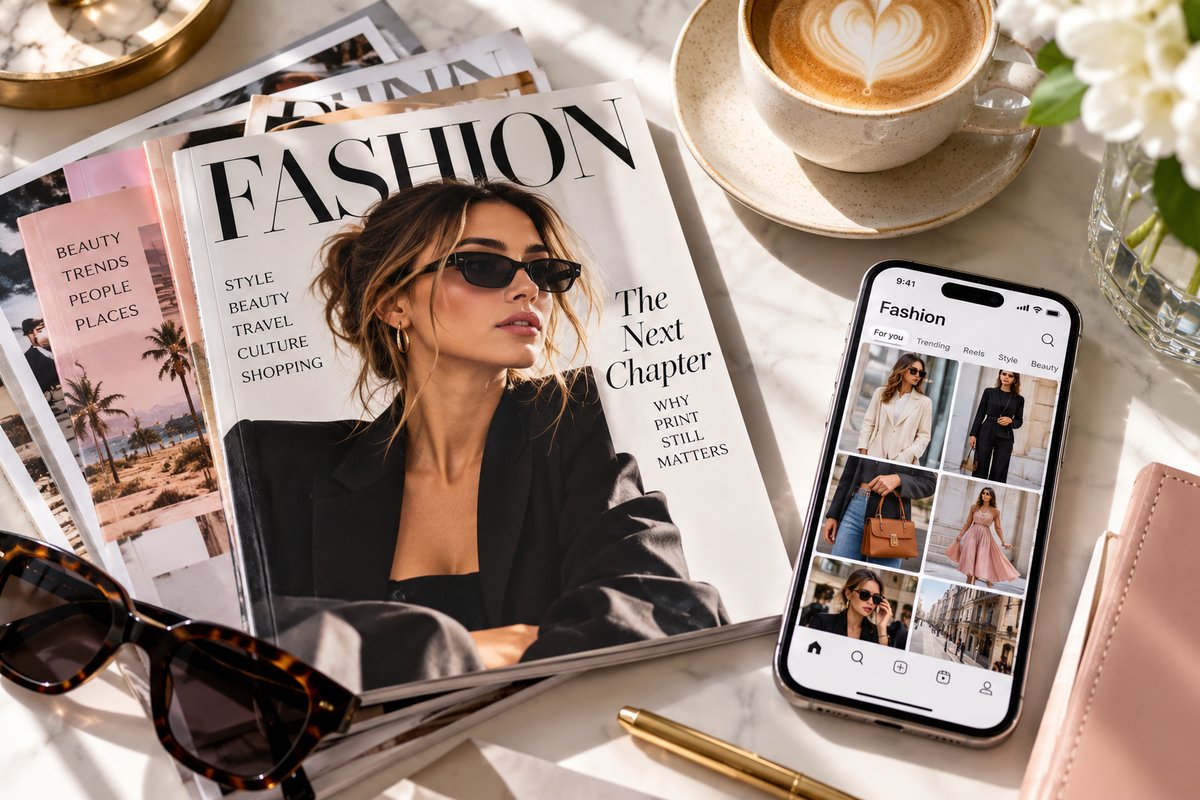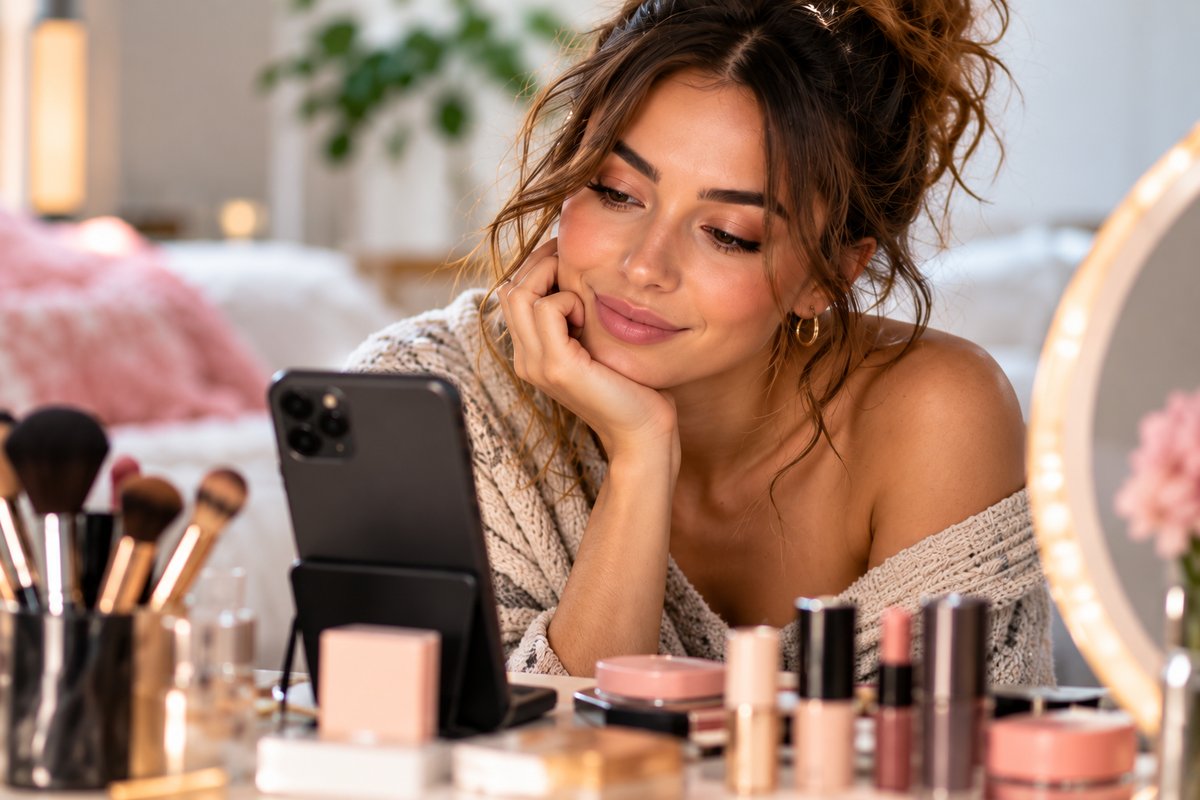
Once upon a time, discovering a new lipstick meant wandering through a department store beauty hall. Today, it might happen while scrolling TikTok — and increasingly, the discovery, demonstration, recommendation and purchase can all happen without leaving the app.
Beauty shopping has always been influenced by recommendations.
We asked friends which mascara they used, read magazines for new product launches and visited beauty counters to test shades and ask for advice.
Then came beauty bloggers, YouTube tutorials and Instagram.
Now TikTok is changing the journey again.
A recent promotion from Revolution Beauty highlights just how far that change has progressed. The beauty brand has been using TikTok Shop to promote limited-edition products and seasonal collections directly to consumers.
The interesting story is not the products themselves.
It is the increasingly blurred line between entertainment, recommendation and shopping.
From Beauty Inspiration to Checkout
Social media has influenced beauty purchases for years.
What has changed is how few steps now separate seeing a product and buying it.
A creator can demonstrate a foundation, show how it wears, answer questions and provide a direct route to purchase — all within the same environment where the consumer first discovered it.
That is very different from traditional beauty advertising.
A magazine advertisement might have encouraged you to visit a store.
An Instagram post might have sent you to a brand's website.
Social commerce increasingly attempts to remove those extra steps altogether.
See it. Want it. Buy it.
Why Beauty Works So Well on TikTok
Beauty is almost perfectly designed for short-form video.
A lipstick can be swatched in seconds.
Foundation coverage can be demonstrated on camera.
A hair tool can produce an immediate before-and-after transformation.
Skincare textures can be shown close-up, while creators can document results over days or weeks.
Products that once relied on carefully styled advertising campaigns can now be demonstrated by hundreds or thousands of people in everyday settings.
That can make beauty content feel more accessible and relatable.
It can also make it remarkably persuasive.
The Creator Has Become the Beauty Counter
Traditional beauty counters offered something online shopping initially struggled to reproduce: demonstration and advice.
Someone could show you a product, explain how to use it and recommend alternatives.
Creators now perform many of those same functions.
The difference is scale.
One creator can demonstrate a product to thousands or even millions of viewers.
Comments become questions.
Tutorials become demonstrations.
Links become the checkout.
In some cases, creators also receive commission when viewers purchase through their links.
That makes understanding the commercial relationship behind a recommendation increasingly important.
When Entertainment Becomes Advertising
One of TikTok's strengths is that advertising does not always look like traditional advertising.
A product might appear inside a tutorial, “get ready with me” video, favourite-products roundup or transformation.
Sometimes the creator simply loves the product.
Sometimes the product has been gifted.
Sometimes the content is sponsored.
Sometimes an affiliate link means the creator receives a commission from resulting sales.
Those distinctions matter.
A recommendation can still be useful when someone earns money from it, but consumers should be able to understand when a commercial relationship exists.
The more seamlessly shopping becomes integrated into entertainment, the more important transparency becomes.
Viral Does Not Necessarily Mean Better
TikTok has demonstrated an extraordinary ability to turn beauty products into overnight sensations.
A particular blush shade disappears from shelves.
An old lipstick suddenly returns to popularity.
A previously little-known skincare product accumulates millions of views.
But virality measures attention.
It does not necessarily measure quality.
Products can trend because the packaging is unusual, the demonstration is dramatic or the creator has an enormous audience.
Sometimes the product is excellent.
Sometimes it simply makes excellent content.
Those are not always the same thing.
TikTok Is Also Changing How Beauty Brands Launch Products
For beauty brands, social commerce creates a very different launch environment.
Instead of relying entirely on advertising, public relations and retail displays, brands can put products directly into the hands of creators and encourage demonstrations almost immediately.
Consumer reactions arrive quickly.
Comments can reveal which shades people want, what questions they have and what they dislike.
A successful product can build momentum extraordinarily fast.
But the opposite is also true.
Negative experiences can spread just as quickly.
The beauty conversation is no longer controlled entirely by the brand.
What Happens to the Traditional Beauty Store?
None of this necessarily means physical beauty stores are disappearing.
Beauty remains an unusually tactile category.
We still want to smell fragrances, feel skincare textures and see whether a foundation actually matches our skin.
Stores also offer something algorithms cannot always reproduce: human interaction and immediate product experience.
Instead, beauty shopping appears to be becoming increasingly fragmented.
You might discover a product on TikTok, research it on Google, watch reviews on YouTube, test it in a store and eventually buy it online.
The beauty counter is no longer one physical place.
It exists across the entire journey.
The Algorithm Is Becoming a Beauty Editor
There is another significant change happening quietly in the background.
Traditional beauty media was curated by editors.
Retail shelves were curated by buyers.
Beauty counters were curated by brands and retailers.
On TikTok, much of what we see is curated by an algorithm.
The products appearing in your feed are influenced by what you watch, like, search for and engage with.
That can make discovery feel remarkably personalised.
It can also create a distorted impression of popularity.
When the same product appears repeatedly in your feed, it can begin to feel as though everyone is using it.
Sometimes that is because a genuine trend is occurring.
Sometimes the algorithm has simply decided that you are particularly interested in it.
Shop the Trend — But Keep Your Critical Eye
TikTok has made beauty discovery faster, more entertaining and, in many cases, more useful.
Watching someone actually apply a product can tell us far more than looking at a polished advertising photograph.
But the convenience of moving directly from recommendation to purchase makes a little hesitation valuable.
Before tapping “buy”, consider who is recommending the product, whether the content is sponsored or affiliated, whether the product suits your individual needs and whether you can find credible opinions outside the platform.
A viral beauty product may turn out to be your new favourite.
It may also be another half-used bottle at the back of the bathroom cabinet.
So, Is TikTok the New Beauty Counter?
In some ways, yes.
It provides discovery, demonstrations, recommendations, conversations and increasingly the checkout itself.
But unlike the traditional beauty counter, there is no single person standing behind it.
There are brands, creators, customers, affiliates and algorithms all influencing what appears on the screen.
That makes TikTok one of the most powerful beauty-shopping environments we have ever had.
It also makes knowing why a product has appeared in front of you almost as important as knowing what the product does.