
In a country where wearing sunscreen is practically non-negotiable, the conversation around SPF is evolving fast. Across Australia, beauty lovers are moving away from traditional sunscreens and embracing mineral formulas that protect both skin and the ocean.
From beach days along the coast to everyday skincare routines, mineral sunscreen has become the modern standard for effective sun protection, glowing skin, and environmental awareness. And when you consider the health of our oceans and reefs, the shift makes perfect sense.
The Importance of Reef-Safe Sunscreens

The rise of reef-safe sunscreen is about more than beauty trends. It’s about protecting delicate marine ecosystems while still making sure we protect our skin from intense UV exposure.
Australia sits beside one of the world’s most famous natural wonders — the Great Barrier Reef — and protecting reef health is increasingly part of responsible sun care.
Understanding Reef-Safe Formulas
A reef safe sunscreen avoids ingredients known to damage coral or affect marine life. Many sunscreens historically contained harmful chemicals such as oxybenzone and octinoxate, which research has linked to coral bleaching and reef degradation.
Because of these risks, several destinations around the world — including Palau and Aruba — have introduced laws that ban the sale and distribution of sunscreens containing those ingredients.
When choosing a reef-safe sunscreen, it’s worth checking the ingredient list for mineral UV filters instead.
Look for active ingredients such as:
- zinc oxide
- titanium dioxide
- non-nano zinc oxide
- zinc or titanium
These mineral filters create a protective barrier that reflects UV rays, rather than letting the skin absorb UV.
The Impact of Chemical Sunscreens on Coral Reefs
Research has shown that some chemical sunscreens can harm coral reefs and affect marine life, even in small concentrations washed off swimmers.
Certain sunscreen formulas may:
- Contribute to coral bleaching
- Disrupt reef reproduction
- Damage fragile marine ecosystems
- Affect fish and other marine organisms
With millions of tourists entering the ocean every year, even small amounts of these ingredients can accumulate and threaten reef ecosystems.
That’s why the term “reef friendly” has become an important signal for environmentally aware consumers — though experts recommend verifying claims carefully.
Benefits of Using Reef-Safe Sunscreens
Switching to reef-friendly, mineral-based sunscreens benefits both your skin and the environment.
Benefits include:
- Safe for reefs and marine life
- Gentle for sensitive skin
- Often made with natural ingredients
- Immediate broad-spectrum SPF protection
- Reduced risk of irritation
For anyone who loves the beach, using sunscreen that protects skin and the ocean just makes sense.
Mineral Sunscreens: A Natural Choice for the Ocean
The newest generation of mineral-based sunscreen products feels nothing like the thick pasty lotions people remember.
Today’s formulas are lightweight, blendable, and designed for daily wear.
How Zinc Sunscreen Works
A zinc sunscreen works by forming a barrier on the skin that reflects UVA and UVB rays.
Unlike chemical filters that absorb UV rays, mineral formulas sit on the surface and deflect them.
The most effective formulas use:
- non-nano zinc oxide
- zinc oxide and titanium dioxide
The non-nano label matters because it indicates particles that are unlikely to penetrate skin or damage marine ecosystems.
If an ingredient simply lists zinc oxide without clarification, experts say it’s probably nano-sized — meaning the particles may be extremely small or nano-sized nanoparticles.
Many environmentally focused brands now ensure they use micro-sized or non-nano zinc to remain safe and effective.
Comparing Mineral and Chemical Sunscreens
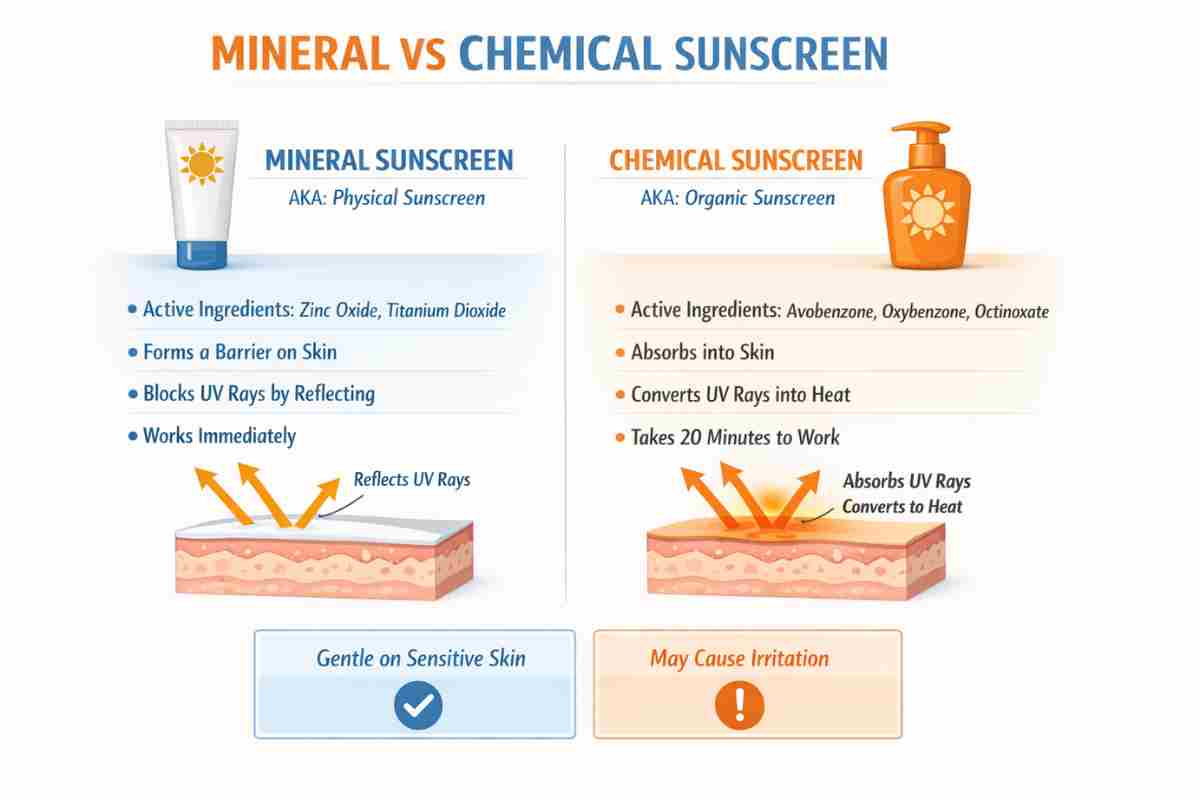
Mineral-based sunscreens
- Reflect UV rays
- Work immediately after application
- Often better for sensitive skin
- Considered safer for reefs
Chemical sunscreens
- Absorb UV and convert it into heat
- Require time before becoming effective
- May include ingredients affecting marine life
- Are common in many sunscreens globally
For everyday SPF 50 protection in Australia’s harsh climate, mineral sunscreen is increasingly the preferred choice.
Favourite Reef-Safe Products in Australia
Beauty editors and dermatologists alike are highlighting the best reef safe sunscreens now available across Australia.
My favourite reef safe formulas share a few key characteristics:
- SPF 50 broad-spectrum protection
- Water-resistant wear
- Non-nano zinc oxide
- Lightweight lotion textures
- Minimal white cast
Many brands are also producing eco-friendly sunscreen products with recyclable packaging and ocean-conscious formulas.
If you’re searching for the best reef safe options, start with mineral-based sunscreens made with zinc oxide and avoid products containing oxybenzone.
Performance Features of Mineral Sunscreens
Modern mineral SPF proves that environmentally responsible formulas can still perform beautifully on skin.
Water-Resistant Properties
A good reef-safe sunscreen should be water-resistant, especially for swimming, surfing, or long beach days.
Even the best sunscreen that works properly still needs maintenance — always reapply after swimming, sweating, or towel drying to ensure protection from UVA and UVB rays.
Tinted Options for Sensitive Skin
One of the biggest innovations in mineral sunscreen has been tinted formulas.
Tinted sunscreen can:
- Prevent a white cast
- Even out skin tone
- Provide light coverage
- Be easy to apply daily
For those with sensitive skin, tinted mineral sunscreen can replace foundation while still delivering high SPF.
Reapplication Tips for Effective Protection

Even the top reef-safe sunscreen won’t help if it’s used incorrectly.
Dermatologists recommend:
- Apply the sunscreen generously
- Reapply every two hours outdoors
- Use sticks or powder SPF over makeup
- Don’t forget ears, neck, hands, and scalp
Proper application ensures your sunscreen stays effective and helps prevent sunburn and long-term skin damage.
Expert Insights on Sunscreen Choices
Experts across dermatology and environmental science agree: wear sunscreen every day.
Organisations such as Cancer Council Australia emphasise that daily sunscreen is essential to protect skin from harmful UV exposure.
Dermatologist Recommendations for Reef-Safe Options
Dermatologists often recommend mineral-based sunscreen formulas because they are:
- Gentle on reactive skin
- Safe for children
- Less likely to clog pores
- Effective broad-spectrum protection
The most recommended formulas are made with zinc oxide or zinc oxide and titanium dioxide.
These active ingredients are widely regarded as both safe and effective.
Addressing Common Misconceptions
Despite their growing popularity, a few myths still surround mineral sunscreen.
“Mineral sunscreen will leave a white cast.”
New formulas use sheer pigments or tint technology to blend naturally.
“Chemical formulas provide better protection.”
Both types can offer strong protection when correctly formulated, though mineral sunscreen avoids ingredients linked to reef damage.
“Reef-friendly claims are always accurate.”
Not always. When choosing reef-safe sunscreen, check for non-nano zinc oxide, avoid oxybenzone, and review the ingredient list carefully.
The Future of Sunscreen in Australia
Australia is leading the global conversation around smarter SPF.
Between rising skin cancer awareness and increasing concern about the impact on coral reefs, sunscreen innovation is accelerating.
We’re seeing:
- More reef-safe sunscreen formulas
- Improved textures with minimal white cast
- Eco-friendly packaging
- Greater transparency in ingredient lists
- Sunscreen designed to protect skin from harmful UV while staying safe for reefs
As travellers become more conscious of protecting destinations like the Barrier Reef, demand for reef-friendly, mineral-based sunscreens will only grow.
Because ultimately, the best beauty routine is simple:
Wear sunscreen, protect your skin, and protect the ocean too.