Beauty technology is moving beyond facial tools and onto the scalp. The same appetite for wearable light devices, targeted treatments and streamlined at-home routines is now reshaping the way consumers think about haircare.
For years, high-tech beauty largely meant LED face masks, microcurrent tools and smart skin analysis. As Fashion Weekly explored in our guide to at-home beauty tech devices, these products appeal because they promise to bring sophisticated routines into everyday life. The next frontier is increasingly focused on the scalp.
Why the scalp is becoming beauty tech's next focus
The shift makes sense. Scalp care has already become a recognised part of modern beauty, with consumers treating the skin beneath their hair as thoughtfully as the skin on their face.
That has brought exfoliating treatments, massaging tools, targeted serums and light-based devices into the conversation. Our earlier look at why scalp care is the new skincare traced the broader move towards routines that consider comfort, buildup and the condition of the scalp rather than focusing only on the lengths and ends of the hair.
At-home devices add another layer to that trend. They turn scalp care into a more deliberate ritual and package complex technology in forms designed to feel approachable, wearable and easy to repeat.
Meet the new Capillus HairBand
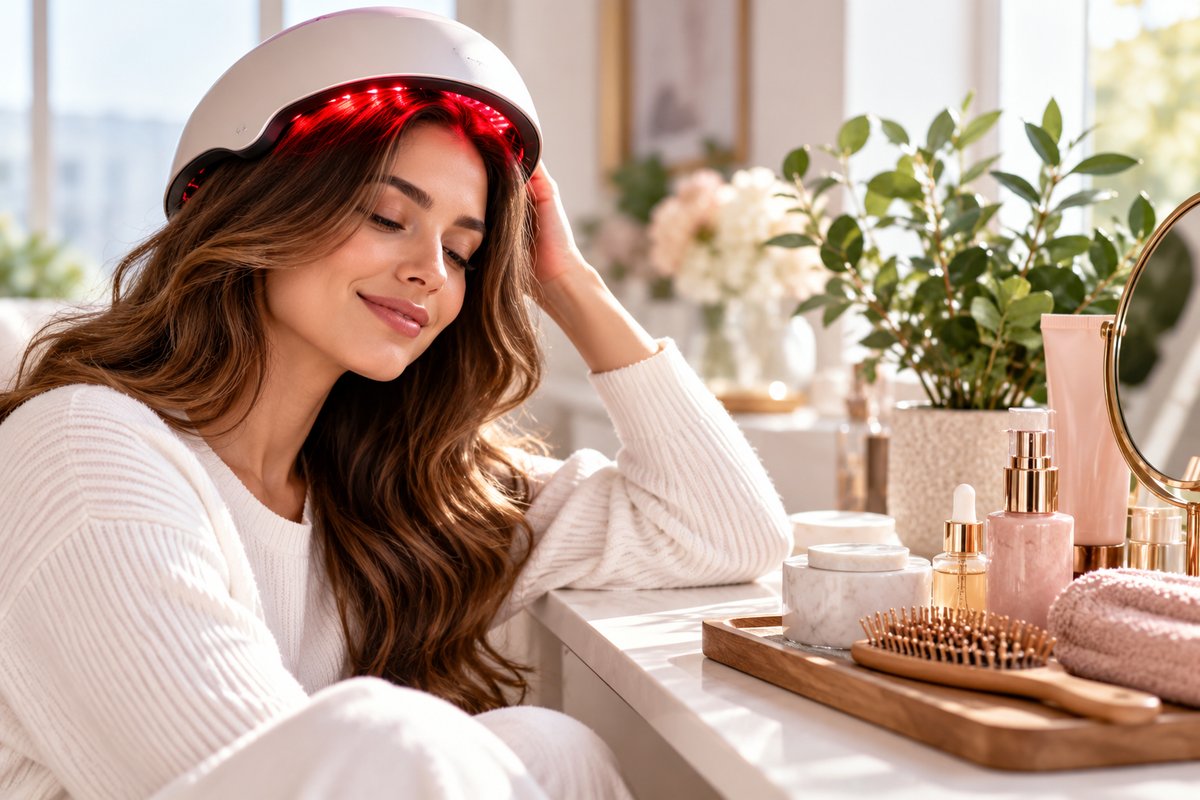
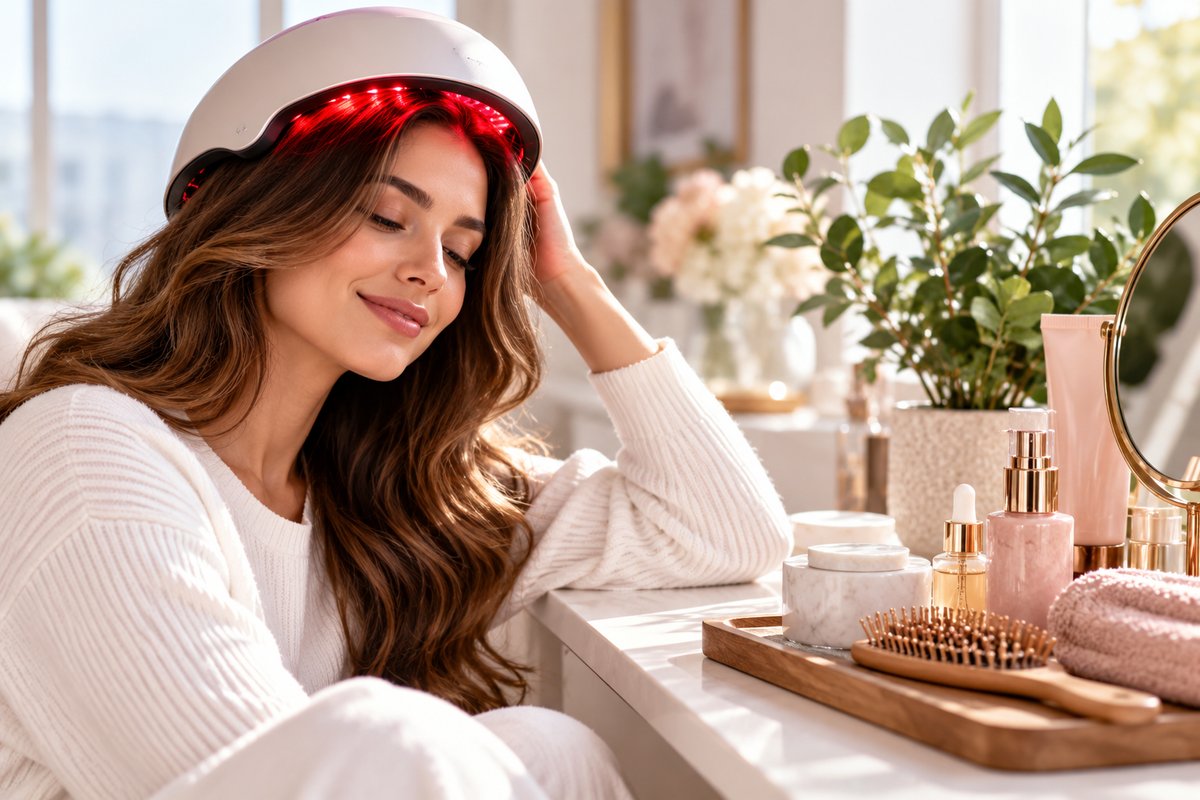
Capillus is the latest brand to bring this idea into a smaller wearable format. Its newly announced HairBand is designed to sit across the hairline, part line and frontal scalp rather than covering the entire head.
According to the company, the lightweight device uses 82 laser diodes at a wavelength of 650 nm and is intended for a five-minute routine three times a week. It also features an automatic shut-off, a magnetic battery and USB-C charging.
The band-like shape reflects an important direction in beauty tech: devices are becoming less bulky and more specific. Rather than trying to address every possible concern at once, newer tools are often designed around a particular area or a short, repeatable routine.
The important qualification behind the launch
The distinction between an interesting beauty device and a proven medical treatment matters, especially when the conversation involves hair thinning or hair loss.
The new Capillus HairBand itself is not currently FDA-cleared for treating hair loss or regrowing hair. Capillus describes the HairBand as a wellness device and says it is not intended to diagnose, treat, cure or prevent disease.
The company's discussion of low-level laser therapy refers to research into the technology generally. It should not be read as clinical evidence for this specific HairBand or as a guarantee that an individual user will see a particular result.
That qualification is essential because polished design and technical specifications can make a product feel more authoritative than the evidence available for the product itself. Consumers should separate a brand's description of the technology from independently established outcomes for the exact device they are considering.
Fashion Weekly Tip: If you are concerned about noticeable or unexplained hair thinning or hair loss, consider speaking with an appropriate health professional before investing in an expensive at-home device.
Devices are joining an already crowded scalp-care routine
Scalp technology is arriving alongside a fast-growing range of topical products. Serums, exfoliants and leave-in treatments can all occupy similar space in a routine, even though they work in very different ways and the evidence behind individual products varies.
Before adding another step, it is worth asking what concern you are actually trying to address. Our guide to scalp serums explains how targeted formulas fit into haircare and why expectations, ingredients and consistency matter.
A device should be approached with the same level of scrutiny. Look for clear instructions, realistic claims, safety information and evidence that applies to the specific product rather than a broad category of technology.
What to consider before buying an at-home scalp device
At-home beauty technology can be appealing, but convenience alone does not make every device a worthwhile investment. Before buying, consider:
- The exact intended use: Check whether the product is presented as a cosmetic, wellness or medical device, and what it is actually cleared or approved to do in the market where it is sold.
- The evidence: Look for information about the specific model rather than assuming research into a general technology proves the same result for every device.
- The routine: Results claimed for light-based devices typically depend on repeated use. Be realistic about whether the schedule will fit your life.
- The cost: Compare the price with other scalp-care options and professional advice, particularly if your concern is hair loss rather than general beauty or wellness.
- Local availability and support: Confirm whether the device is officially sold in Australia, what warranty applies and how customer support or returns would work.
Fashion Weekly's take
The Capillus HairBand is an example of where beauty innovation is heading: more targeted, more wearable and designed to fit into shorter at-home rituals.
Its launch also shows why beauty-tech coverage needs clear distinctions. A sleek device can be interesting as a design and wellness story without being treated as a proven solution for hair loss.
As scalp care continues to expand, the most useful approach is likely to be a measured one. Start with the concern, read the product's claims carefully and seek appropriate professional guidance when changes to hair or scalp health are noticeable, unexplained or persistent.
Beauty tech may be moving to the scalp, but informed expectations remain the most important tool in the routine.